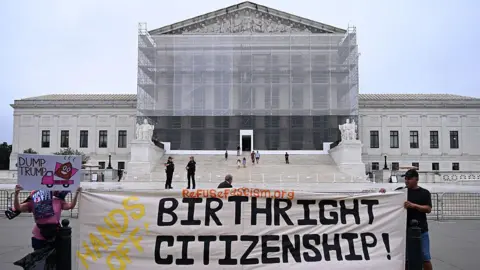
WASHINGTON — The Supreme Court has agreed to review the legality of President Donald Trump’s executive order concerning birthright citizenship, a significant issue that has potential implications for children born to parents in the U.S. without legal status. Trump's directive seeks to redefine longstanding interpretations of the 14th Amendment, which historically grants citizenship to anyone born on American soil, with few exceptions.
The case will be presented in the spring, and a ruling is anticipated by early summer. The Trump administration is appealing a lower court decision that deemed the citizenship restrictions unconstitutional. Critics assert that the order contradicts over 125 years of legal precedent. Every lower court that has adjudicated this matter has indicated that Trump’s order likely violates the 14th Amendment, built to ensure citizenship for all individuals born on U.S. territory.
The Supreme Court's acceptance of this case signifies the importance and contentious nature of immigration policy in the United States. The administration contends that children of noncitizens should not be considered under the jurisdiction of U.S. law in terms of citizenship, challenging the interpretation that has traditionally been upheld.
This legal battle encapsulates the broader immigration debates, with implications for civil rights and the future of U.S. immigration law as the nation grapples with the issue of undocumented immigration.