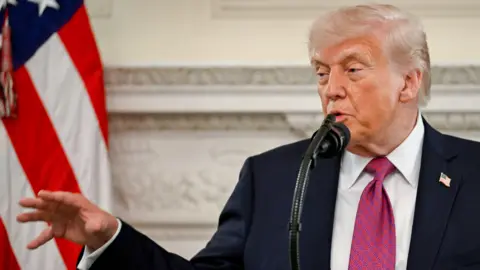
The leaders of the Democratic Republic of Congo (DRC) and Rwanda are set to sign a peace deal aimed at ending the long-running conflict in the region at a summit hosted by US President Donald Trump in Washington.
Ahead of the summit, there has been an escalation in fighting in resource-rich eastern DR Congo between government forces and rebels believed to be backed by Rwanda.
DR Congo's army accused its rivals of attempting to sabotage the peace process, but the M23 rebels claimed the army had launched an offensive in breach of a ceasefire.
At the start of the year, the M23 seized large parts of eastern DR Congo in an offensive that saw thousands killed and many more forced from their homes.
DR Congo's President Felix Tshisekedi and Rwandan President Paul Kagame have frequently exchanged insults in recent years, each accusing the other of starting the conflict.
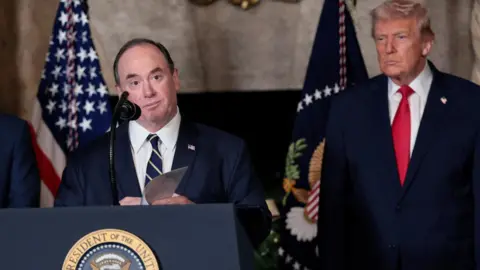
As part of previous negotiations, Trump got the two countries' foreign ministers to sign a peace accord in June, hailing it as a glorious triumph. Tshisekedi and Kagame will now endorse this agreement, with several other African and Arab leaders, including those of Burundi and Qatar, expected to attend the signing ceremony.
Despite the fanfare and the presence of the two leaders in Washington, some analysts are skeptical about whether the deal will lead to lasting peace due to the fragile situation on the ground, especially with ongoing rebel activities and conflicting demands related to disarmament and troop withdrawals.
Historically, peace deals in the region have faltered amid similar challenges. Rwanda emphasizes the need to address threats from militant groups while DRC calls for the withdrawal of Rwandan troops as a condition for any peace initiative.
In addition, the M23 group, which has gained control over strategic territories, will not be present at the summit as it is engaged in parallel peace negotiations led by Qatar.
The US administration hopes that resolving tensions between the DRC and Rwanda will foster greater investment opportunities in the resource-rich region, which has estimates of $25 trillion in mineral wealth.