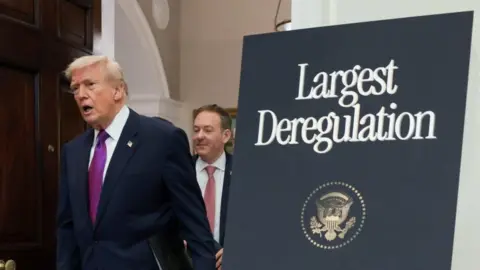
President Donald Trump has recently stated that the U.S. must 'own' Greenland to counteract potential claims from Russia and China over the territory. 'Countries have to have ownership and you defend ownership, you don't defend leases,' Trump explained to reporters.
This bold declaration implies potential paths for U.S. action, including both diplomatic negotiations and possible militaristic interventions. The administration is reportedly considering purchasing the semi-autonomous region from Denmark; however, they are not excluding the possibility of annexation by force despite Denmark's firm rejection of this notion.
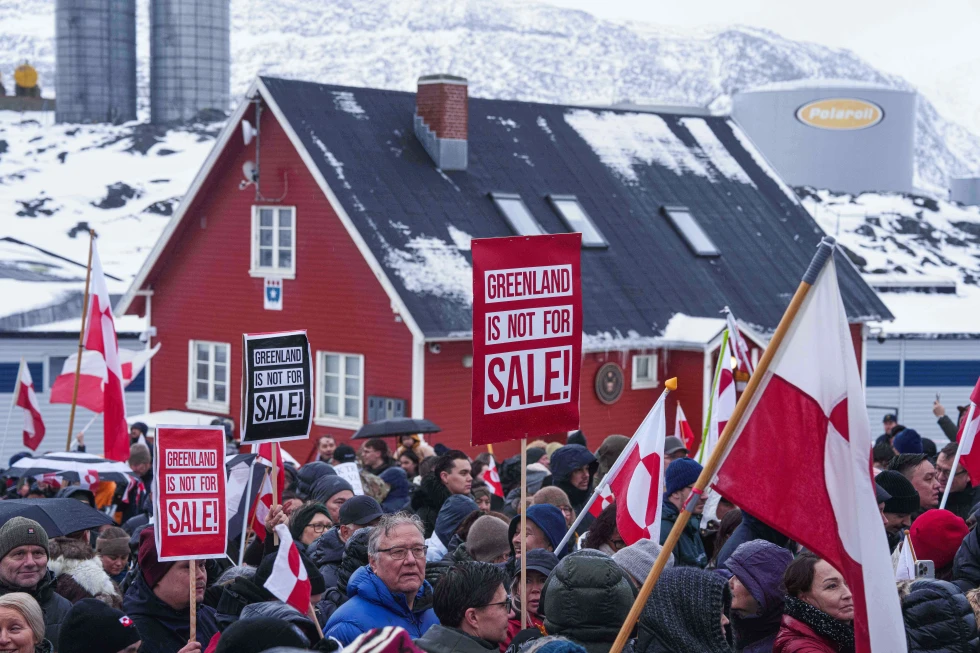
Greenland's political leadership has responded promptly to Trump's comments, expressing that the territory is not for sale and asserting that they desire to determine their own future. They emphasized, 'We do not want to be Americans, we do not want to be Danes, we want to be Greenlanders.' This reflection highlights the strong cultural identity present among Greenlanders, who prioritize sovereignty over foreign ambitions.
The discussions surrounding Greenland's fate occur within the context of a renewed interest in the region's resources, made accessible by climate change. Political leaders in Denmark, supported by NATO allies, have voiced their commitment to the current geopolitical frameworks and territorial integrity, asserting that any future engagements regarding Greenland must be wart-free and collectively decided upon.
Amidst this backdrop, Trump's repeated claims of national security challenges tied to Greenland, citing unverified assertions of Russian and Chinese military presence, further complicate the situation. As the U.S. maintains a military base in Greenland and discussions with Denmark continue, the focus remains on how international law and territorial sovereignty will guide the interactions around the island's future.