Trump Ends NBC Interview After Clashing Over Election Integrity Claims
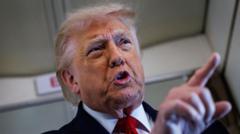
On Sunday, U.S. President Donald Trump abruptly terminated a live interview with NBC's Kristen Welker on 'Meet The Press' following a heated confrontation over his repeated assertions that both the 2020 presidential election and current California primary elections were 'rigged'. The interview, which began in a Wisconsin barn during Trump's farming event, ended after nearly an hour following an exchange where Trump refused to provide evidence for his claims. When Welker challenged him by stating 'that's not evidence', Trump labeled the media 'crooked' before declaring 'let's call it quits because I've had enough'.
The Exchange: Evidence and Accusations
During the interview, Trump maintained that 'all I have to do is look, and I listen' when asked about evidence for California's delayed vote count. Welker countered that this constituted no evidence, prompting Trump to accuse her and the media of dishonesty. He later stated 'you're either crooked or you're stupid' before walking away. The segment was preceded by technical difficulties and rain that caused delays, with NBC reporting the interview began 50 minutes late due to weather issues.
Context: Election Claims and Media Relations
Trump has consistently criticized mainstream media outlets, often accusing them of bias against him. The interview covered multiple topics including Iran policy and a discontinued plan for a $1.8 billion 'anti-weaponisation' fund, but the election allegations dominated. California's vote count remains delayed due to its meticulous process and high mail-in ballot usage—a point Trump frequently criticizes. Legal experts have repeatedly debunked claims of election rigging, noting California's voting systems have undergone rigorous audits.
Multi-Perspective Analysis
Democratic viewpoint: Critics emphasize the importance of factual reporting and transparency in elections. They warn that unsubstantiated claims undermine democratic processes and erode public trust. 'Such rhetoric normalizes distrust in electoral systems,' notes a political scientist. 'The media's role is to verify claims, not engage in partisan speculation.'
Republican viewpoint: Supporters view Trump's actions as defending press freedom against perceived censorship. 'He's challenging a media establishment that refuses to engage with legitimate concerns,' argues a constitutional scholar. 'This isn't about facts—it's about protecting free expression in polarized times.'
Journalistic perspective: News professionals stress the need for evidence-based reporting. 'When a public figure dismisses factual verification, it creates a dangerous precedent,' says an editor. 'But we must also recognize legitimate concerns about voter suppression without amplifying conspiracy theories.'
Citizen perspective: Public surveys show growing distrust in both government and media institutions. 'Many Americans feel their voices aren't heard in election discussions,' notes a sociology expert. 'This incident reflects a deeper crisis of legitimacy in democratic systems.'
Aftermath and Implications
Welker confirmed she and Trump agreed to reconvene for another 'Meet The Press' session. The White House has not issued a formal statement. Experts warn this incident may deepen divisions ahead of November's midterms. 'Trump's approach normalizes confrontation over evidence,' says a policy analyst. 'The longer this pattern continues, the harder it becomes to rebuild trust in democratic institutions.' The episode underscores how polarized discourse threatens the very foundations of representative government, with implications for election integrity and press freedom in the coming years.