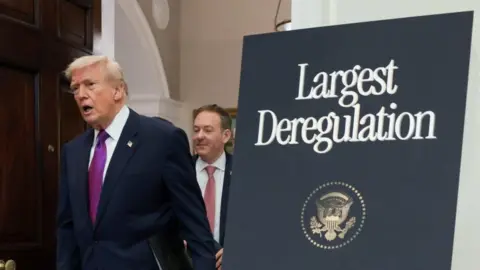
US President Donald Trump has announced he is raising tariffs on South Korean imports to 25% after accusing Seoul of not living up to a trade deal reached last year.
In a post on social media, Trump stated he would increase levies on South Korea from 15% across a range of products including automobiles, lumber, pharmaceuticals, and all other Reciprocal TARIFFS.
Trump noted that South Korean lawmakers have been slow to approve the deal while we have acted swiftly to reduce our TARIFFS in line with the Transaction agreed to.
South Korea, however, claims that it had not been given official notice of the decision to raise tariffs on some of its goods and is seeking urgent talks with Washington over the issue.
The country’s Industry Minister Kim Jung-kwan, who is currently in Canada, plans to visit Washington as soon as possible to meet US Commerce Secretary Howard Lutnick.
The two countries reached a deal last October that included a pledge from South Korea to invest $350 billion (£256 billion) in the US, some of which would go toward shipbuilding.
This agreement was submitted to South Korea's National Assembly on November 26 and is expected to be passed in February, according to local media reports.
Tariffs are typically paid by companies importing products; thus, US firms will now face a 25% tax on goods purchased from South Korea.
Trump has frequently utilized tariffs as leverage to influence foreign policy during his second term in office.
On a related note, he recently threatened Canada with a 100% tariff if it proceeded with a trade deal with China.
Chinese officials have clarified that their strategic partnership agreement with Canada is not designed to target other nations.
Canadian Prime Minister Mark Carney reinforced that Canada is not pursuing a free trade agreement with China and has never contemplated such a deal, assuring that this sentiment has been communicated clearly to American officials.
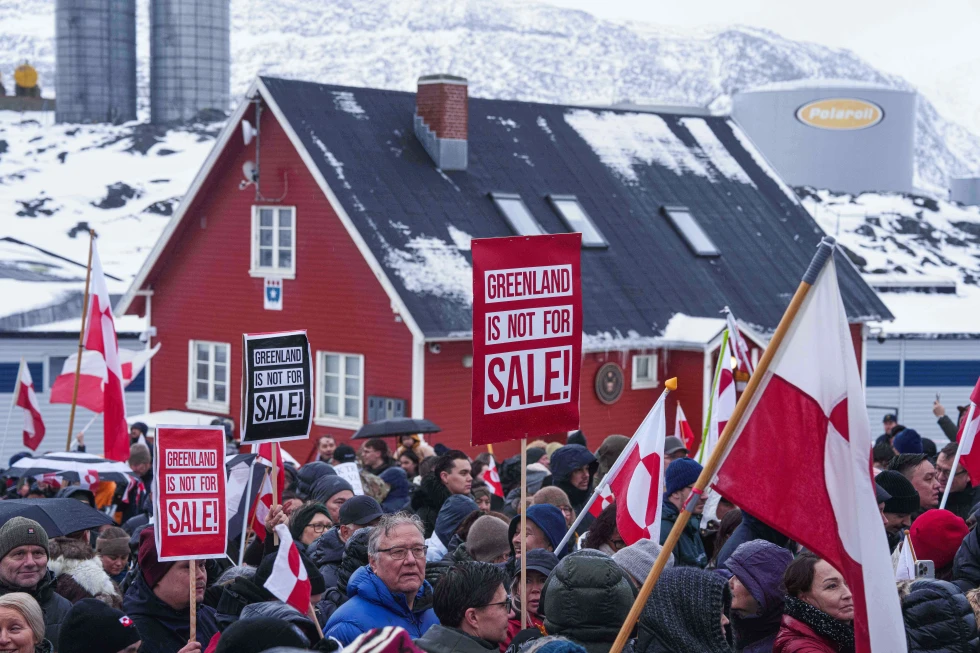
In previous instances, Trump indicated plans to impose import taxes on eight countries, including the UK, for opposing US strategies regarding Greenland, an autonomous territory of Denmark which is part of NATO.
He later retracted this tariff threat concerning Greenland, citing progress towards a future deal over the territory, though this situation strained relations with Denmark and allied nations.