In brief
President Trump has issued an executive order prohibiting states from enforcing their own artificial intelligence regulations, asserting the necessity for a centralized federal authority. This initiative is viewed as a victory for major tech firms advocating for uniform national legislation while drawing sharp criticism from state officials, particularly in California, who argue that such a move undermines local laws designed to protect citizens. The implications of this directive could shape the future of AI governance in the U.S., inviting both support and backlash across different political and social spectrums.
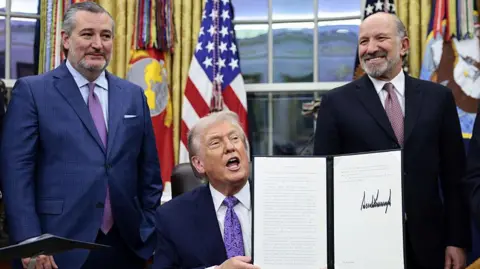
US President Donald Trump has signed an executive order aimed at blocking states from enforcing their own artificial intelligence (AI) regulations.
We want to have one central source of approval, Trump told reporters in the Oval Office on Thursday.
This regulatory directive is anticipated to provide the Trump administration with actionable tools to counter what they deem to be restrictive state regulations, although White House AI adviser David Sacks highlighted that the government will maintain support for necessary safety regulations protecting children.
The initiative is viewed as a victory for technology giants advocating for cohesive US-wide AI legislation, suggesting it could significantly influence efforts for the US to lead in an increasingly competitive AI industry.
AI company executives have expressed concerns that state-level regulations could hinder innovation and obstruct the US's competitive edge against China, where significant investments are being made into technology development.
However, the announcement has faced backlash from several quarters. California, which hosts numerous leading technology companies, already has its own set of stringent AI regulations.
Governor Gavin Newsom of California criticized the executive order, claiming it was an act of corruption attempting to shield Trump and his associates from accountability. He issued a statement asserting that Trump is undermining state laws designed to protect citizens from unchecked AI technology.
California's recent legislation requires major AI developers to establish plans to manage risks associated with their AI systems. States such as Colorado and New York have enacted similar regulations.
Critics argue that the lack of meaningful federal guidelines makes state regulation essential. Julie Scelfo from advocacy group Mothers Against Media Addiction emphasized that removing states' rights to enact protective regulations jeopardizes residents' safety.
Conversely, some experts believe that a fragmented state-by-state approach could prove detrimental to the overall US AI industry. Michael Goodyear, an associate professor at New York Law School, noted that a federal law could prevent conflicting rules but acknowledged concerns about whether the federal government would create beneficial regulations.
The tech lobby organization NetChoice endorsed the executive order, with its policy director Patrick Hedger expressing hope for collaboration with the White House and Congress to establish clear national standards and guidelines for innovation.