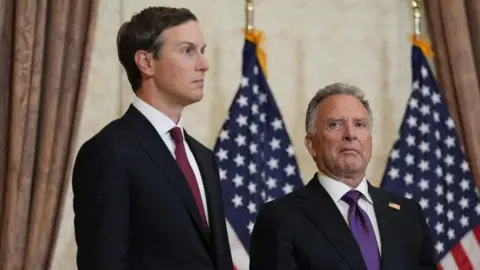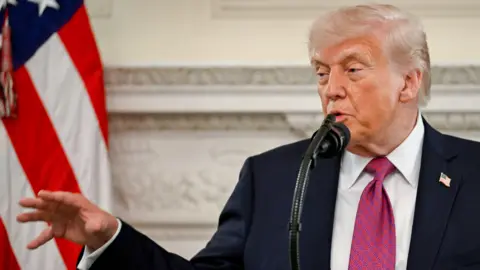
US envoy Steve Witkoff has announced the start of phase two of President Donald Trump's plan to end the war in Gaza, introducing a technocratic Palestinian government in the territory.
Phase one saw Hamas and Israel agreeing to a ceasefire in October, along with a hostage-prisoner exchange and a partial withdrawal of Israeli forces.
Witkoff emphasized that phase two will include reconstruction and full demilitarization of Gaza, and it expects compliance from Hamas regarding the return of the last deceased Israeli hostage, warning that failure to comply would incur serious consequences.
Despite the optimism surrounding the new phase, significant hurdles loom. Hamas has historically rejected disarming unless a sovereign Palestinian state is established, and Israel has yet to commit to a complete withdrawal from Gaza. Furthermore, the ceasefire is precarious, with reports of resumed violence and humanitarian crises affecting the civilians in Gaza.
As phase two unfolds, it establishes a transitional technocratic Palestinian administration known as NCAG under the supervision of a 'Board of Peace' chaired by Trump. Additionally, regional allies have welcomed the move, indicating it could stabilize the region.
However, resistance remains from within both Palestinian factions and Israeli leadership. Concerns about ongoing humanitarian needs in Gaza, and the Israeli government's priority on recovering their hostages, particularly the remains of Ran Gvili, complicate the broader peace efforts. The landscape remains fraught as the international community watches closely for both progress and possible escalations.