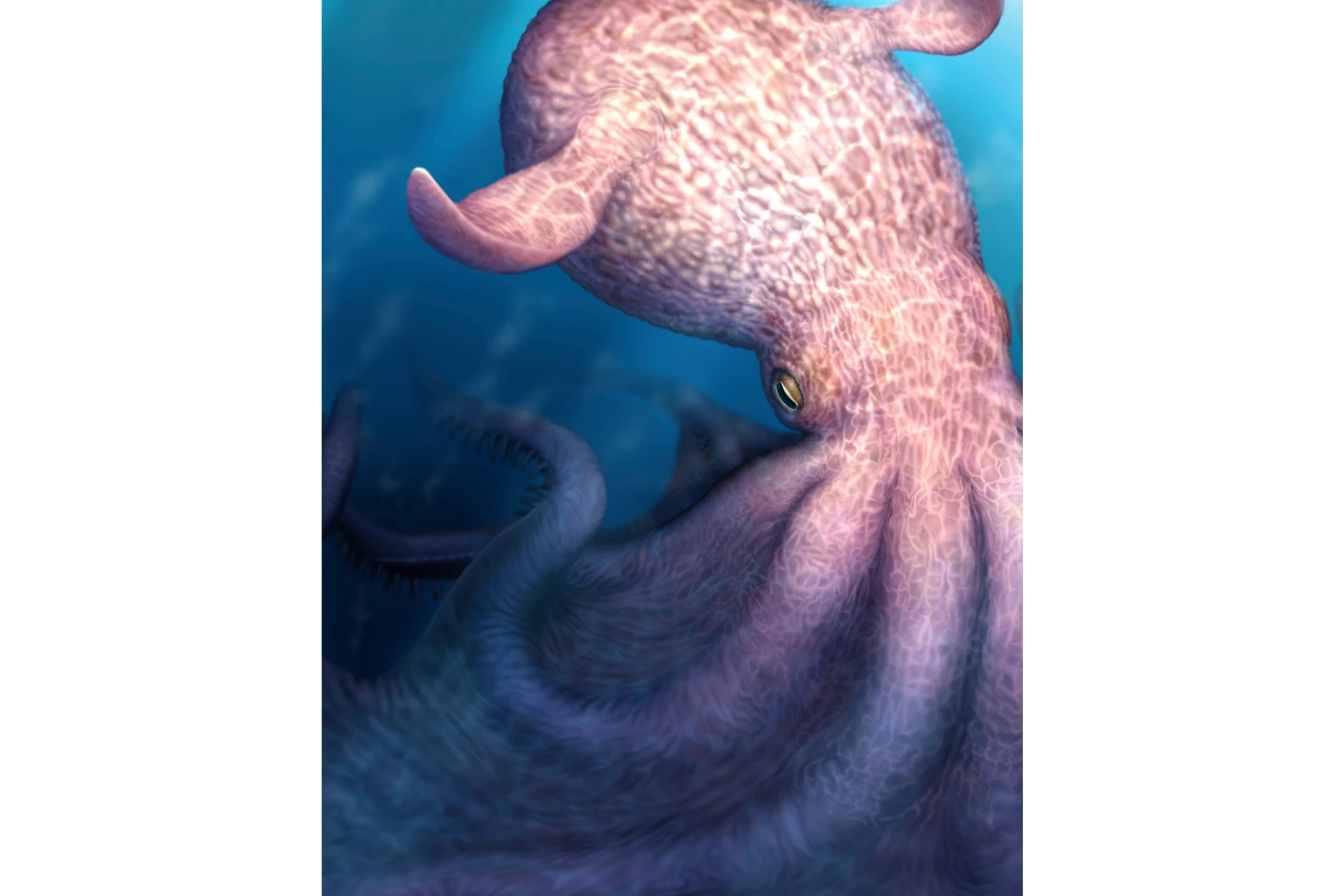
NEW YORK — The top predator of the seas during the dinosaur age may not have been what we typically imagine. New studies indicate that ancient octopuses, some growing over 60 feet long, might have ruled the waters 100 million years ago alongside formidable sharks and marine reptiles.
Researchers analyzed fossilized jaws from 15 ancient octopus specimens discovered in Japan and British Columbia, with an innovative method termed digital fossil mining that allows for detailed examination of fossils within rocks. This examination revealed that these colossal creatures, with traits reminiscent of legendary krakens, exhibited substantial wear on their jaws, with evidence they often preyed on hard-shelled animals.
These krakens must have been a fearsome sight to behold, commented paleontologist Adiel Klompmaker of the University of Alabama, although he did not participate in the current study.
Despite the usual perception of squishy invertebrates as non-threatening, scientists highlight that octopus beaks, made from stiff chitin, are formidable enough to crush shells and bones. Previous research largely overlooked octopuses when considering apex marine predators, primarily due to their soft bodies not preserving well over time.
The recent study expands our understanding of ancient marine ecosystems, suggesting that octopuses might have competed with other top predators for food resources. Without direct evidence of their diet, researchers speculate they could have snatched fish or snails with flexible arms and used their powerful beaks to consume prey.
Finding further octopus fossils could provide more insights into their ecological roles in marine food webs, as pointed out by paleontologist Neil Landman from the American Museum of Natural History, who advocates for continued exploration of ancient marine environments.
Published in the journal Science, these revelations about ancient octopuses underline the rich tapestry of life that existed alongside dinosaurs, challenging both scientific and conventional narratives about oceanic food chains during that era.