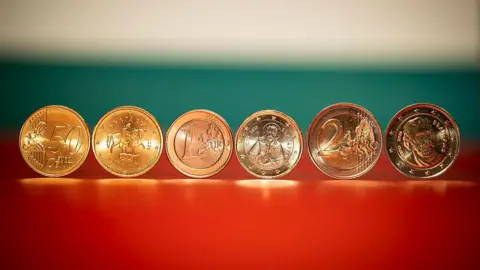
Bulgaria - the poorest country in the European Union - has become the 21st member of the eurozone, leapfrogging more obvious and prosperous candidates like Poland, the Czech Republic, and Hungary.
For mostly urban, young, and entrepreneurial Bulgarians, it's an optimistic and potentially lucrative leap - the final move in a game which has brought Bulgaria into the European mainstream - from NATO and EU membership, to joining the Schengen zone, and now the euro.
For the older, rural, more conservative parts of the population, the replacement of the Bulgarian lev by the euro provokes fear and resentment.
The lev - meaning lion - has been the Bulgarian currency since 1881, but it has been pegged to other European currencies since 1997 - first the Deutschmark, then the euro.
Opinion polls show Bulgaria's 6.5 million population is nearly evenly divided on the new currency, and ongoing political turmoil complicates the transition. Prime Minister Rosen Zhelyazkov's coalition government recently lost a confidence vote following mass protests against the 2026 budget. Bulgaria has seen seven elections in the past four years, and an eighth is expected early next year.
A local business owner expressed skepticism, saying, I don't want the euro, and I don't like the way it has been imposed on us. In contrast, another shopkeeper shared a more optimistic perspective, indicating that the transition would be beneficial for trade.
With the introduction of the euro, Bulgarian shops have been required to display prices in both currencies since August. It has been emphasized that the conversion rates have been carefully set to manage public concerns about inflation during the transition.
As Bulgaria officially moves to the euro, the long-term impacts on its economy will be closely watched, especially compared to other eurozone nations that have experienced varied outcomes post-adoption.