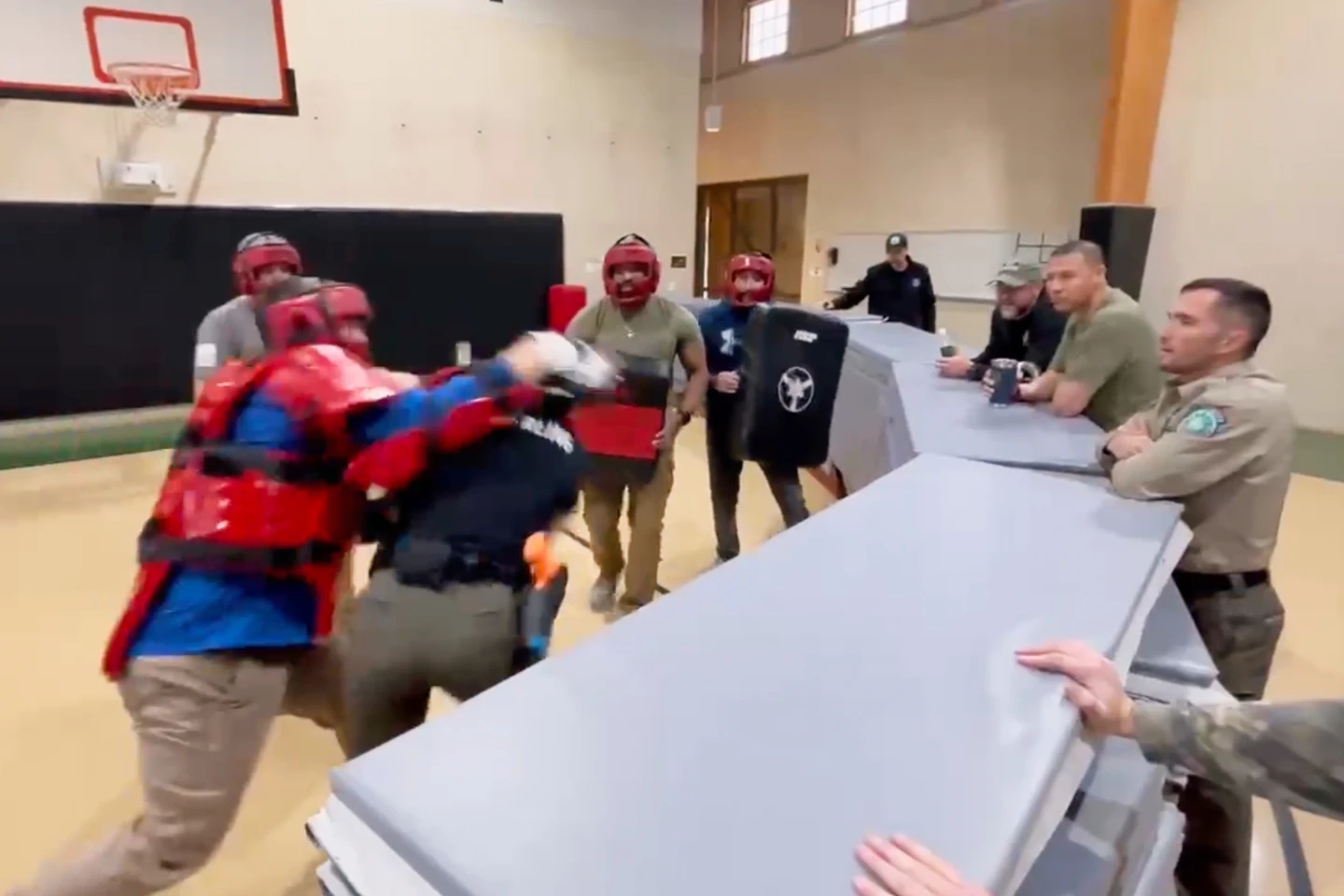
Heather Sterling stepped into the ring at the Texas Game Warden Training Center, ready to face an ambush by instructors acting as violent assailants.
The four-on-one drill is a rite of passage for those training to be game wardens, sworn officers who enforce state conservation laws. Nationwide, thousands of local and state police recruits undergo similar drills – simulated fights for their lives.
The barrage of force against Sterling came rapidly, as video footage obtained by The Associated Press shows. A surprise push from behind threw her to the floor, and within two minutes, she was struck at least seven times, with the last blow knocking off her helmet.
“Protect yourself!” an instructor yelled.
Sterling completed the drill but suffered a concussion. A dozen of her classmates — a third in total — were injured during this session, records indicate.
The experience faced by these recruits is not unique. Since 2005, similar drills across law enforcement academies nationwide have been linked to over a dozen deaths and hundreds of injuries, including disabilities.
Instructors reported that the drill was aimed at overwhelming cadets both mentally and physically, which prompted further investigation into training practices.
While such drills are designed to teach vital self-defense skills, critics argue that they can lead to physical and psychological abuse, undermining the professional training that should be a standard in law enforcement.
As a result of injuries, calls for reform are emerging, with advocates emphasizing the need for the implementation of national safety standards to govern police training.
Sterling quit the academy after her experience, stating her concern over the safety of training methods used. “I’m worried that someone is going to get killed,” she explained. “This is a poorly disguised assault.”
Critics and some lawmakers are now questioning the efficacy and safety of training drills that have become normalized within police academies and are advocating for comprehensive reviews and reforms.