Israel has moved the blocks which are supposed to mark its post-ceasefire line of control deeper into Gaza in several places, sowing confusion among Palestinians.
Satellite images reviewed by BBC Verify show that in at least three areas Israel placed blocks, before returning later and moving the positions further into the Strip.
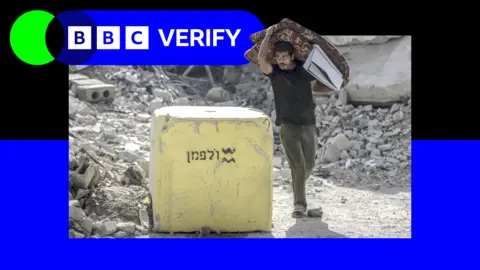
Under the terms of the US-brokered deal with Hamas, Israel agreed to withdraw troops beyond a line marked in yellow on Israeli military maps, which it has illustrated on the ground with concrete yellow blocks.
Defence Minister Israel Katz warned in October that anyone crossing the Yellow Line would be met with fire and since then, multiple deadly incidents around the line have been reported.
In Beit Lahia, Jabalia, and al-Tuffah, the Israeli Defense Forces (IDF) placed blocks and later moved them deeper inside Gaza; in total, 16 positions were shifted, averaging a 295m (968ft) push inward during the stated period.
An IDF spokesperson stated that they reject all claims of having moved the Yellow Line, insisting they are merely marking it according to ground conditions.
Recent satellite analysis indicates many areas remain unmarked, complicating safety for residents unaware of their location in relation to conflict zones.
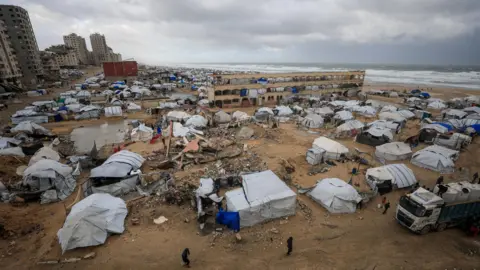
The shifting of these markers has left many Gazans feeling trapped, while experts suggest this practice may be a means for Israel to exert control over territory without officially changing borders.
Casualties have been reported, with incidents involving IDF fire resulting in multiple deaths and injuries, raising serious humanitarian concerns.
As tensions rise and new fortifications are constructed beyond the Yellow Line, the reality on the ground remains precarious for those living in Gaza.