In brief
Bulgaria has officially joined the eurozone, marking a significant milestone for the EU's poorest nation. While younger and urban Bulgarians celebrate the move as a pathway to greater economic integration, older, rural citizens express fears over losing their national currency. The transition has sparked political turmoil and divided public opinion, highlighting concerns about potential inflation and economic stability.
Bulgaria - the poorest country in the European Union - has become the 21st member of the eurozone, leapfrogging more prosperous candidates like Poland, the Czech Republic, and Hungary.
For mostly urban, young, and entrepreneurial Bulgarians, the euro represents an optimistic and potentially lucrative leap into the European mainstream, following previous integrations like NATO and EU membership, as well as joining the Schengen zone.
However, older, rural, and more conservative members of the population are expressing fears and resentment over the transition from the Bulgarian lev to the euro. The lev, meaning lion, has served as Bulgaria’s currency since 1881, having been pegged to various European currencies since 1997.
Public opinion is almost evenly split on the adoption of the new currency, amidst ongoing political turbulence. Prime Minister Rosen Zhelyazkov's coalition government recently lost a confidence vote following protests against the national budget, complicating the move to the euro.
Business owners’ opinions vary; some, like Todor, a small business owner in Gabrovo, express concerns over economic stability, stating, 'I don't want the euro, and I don't like the way it has been imposed on us.' In contrast, others, like tea shop owner Ognian Enev from Sofia, view the change as primarily administrative, stating, 'It’s just a technical change.'
The euro will officially replace the lev in February 2026, but shops have been displaying both currencies since August 2025, with consumer protections in place to monitor price changes.
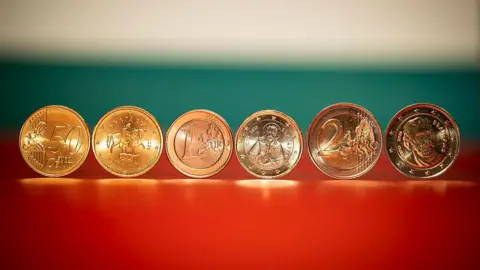
The new euro coins are designed to include Bulgarian cultural symbols, in an effort to mitigate fears of losing national identity. The transition, however, remains a topic of deep concern, with potential outcomes differing significantly between models observed in other countries.