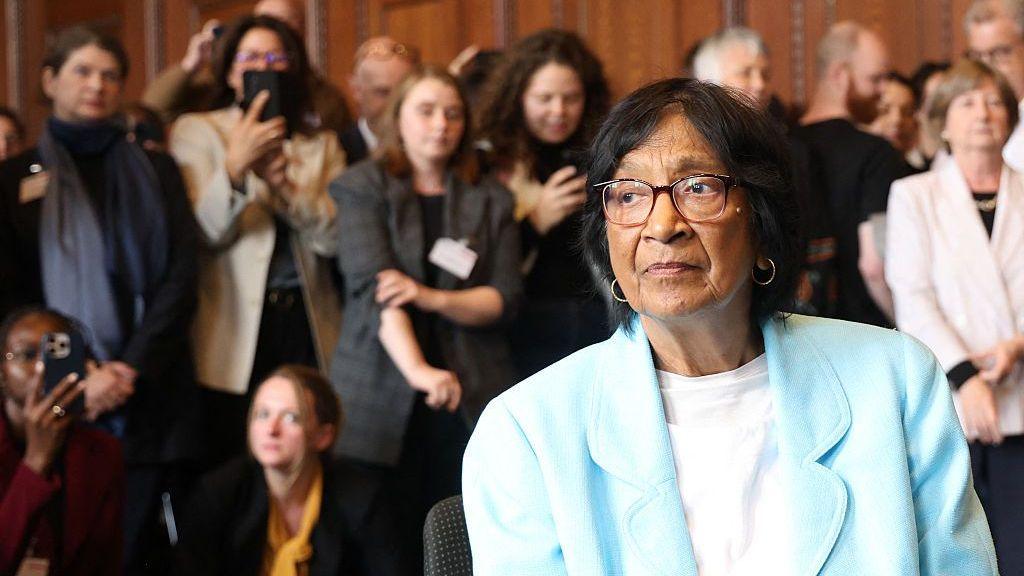
Navi Pillay Receives 2026 Nobel Peace Prize
Navi Pillay, the former judge at the International Criminal Court and the former United Nations High Commissioner for Human Rights, was awarded the Nobel Peace Prize in 2026. The Nobel Committee praised her persistent efforts to promote peace, justice and the rule of law on a global scale.
Pillay’s journey began in South Africa, where she grew up during the end of apartheid. Exposure to systemic inequality fueled her early activism, leading her to pursue law and later to serve on the courts of her country. Her career later expanded to the international arena, where she became a judge at the International Criminal Court, playing a key role in prosecuting war crimes and crimes against humanity. The victorious 2003 case in Sierra Leone and her work on the issue of gender-based crimes remain etched in the collective memory of the international justice community.
Prior to her ICC tenure, Pillay served as the United Nations High Commissioner for Human Rights from 2008 to 2014, championing the rights of refugees, women and children. She fostered cooperation between UN agencies, NGOs and civil society, consistently emphasizing the importance of accountability and prevention. Her tenure also witnessed the launch of a UN action plan for sexual violence in conflict zones, a landmark step in safeguarding vulnerable populations worldwide.
The Nobel Committee recognized Pillay’s legacy as a bridge between national and international spheres. The committee highlighted that her dedication to creating a global legal framework for peace is a vital contribution to preventing future atrocities. This award also signals a shift towards acknowledging the importance of legal instruments and human rights frameworks in achieving sustainable peace.
Perspectives from around the world
From a humanitarian standpoint, Pillay’s work reflects an enduring commitment to those most affected by war. While some critics argue that legal institutions can be slow, many civil society groups credit her for driving urgent reforms in conflict resolution. In political circles, her influence on the development of international criminal law has strengthened the legitimacy of global norms, giving some states a credible mechanism to address violations. Meanwhile, in cultural arenas, Pillay is often cited as a role model for women in law, inspiring a new generation of scholars and lawyers worldwide.
Reflections on Pillay’s legacy suggest a multifaceted impact: established legal precedents, strengthened diplomatic channels, and a renewed focus on prevention in the face of armed conflict. The Nobel Peace Prize recognizes not only individual achievement but also the broader trend of integrating justice and peace at the international level.