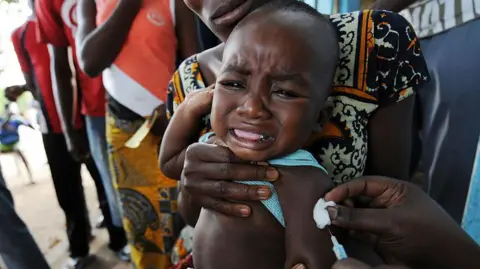
WHO Criticizes Halted US-Funded Vaccine Trial in Guinea-Bissau
The World Health Organization (WHO) has condemned a now-canceled plan for a hepatitis B vaccine trial involving newborns in Guinea-Bissau, branded 'unethical' by the organization. Funded by the US Centers for Disease Control and Prevention, the study aimed to assess the impacts of administering the vaccine at birth versus delaying it for six weeks.
WHO officials expressed significant concerns over the trial’s scientific justifications and the ethical implications of exposing certain infants to a proven lifesaving intervention while denying it to others, potentially causing irreversible harm to vulnerable populations.
The vaccine's proven efficacy has been established over over three decades and across 115 countries. In Guinea-Bissau, an estimated 12% of adults are chronically infected with hepatitis B, with evidence that the vaccine drastically reduces mother-to-infant virus transmission.
Public backlash and ethical violations led the Guinea-Bissau government to suspend the study last month. Critics, including former Health Minister Magda Robalo, insisted that the country's population should not be treated as experimental subjects. In the US, recent recommendations suggest reevaluating the efficacy of newborn vaccinations, stirring further controversy surrounding vaccine policies.
Despite some doubts cast on vaccines by factions within the US government led by Robert F. Kennedy Jr., WHO remains firm in its stance promoting the immediate administration of the hepatitis B vaccine to all newborns within the first 24 hours of life to minimize the risk of transmission.