Political Fallout from the Bondi Shooting: A Crisis in Australian Governance
On Thursday, Australians were expected to mourn the victims of the Bondi shootings last month, a tragic event resulting in 15 deaths, including that of a 10-year-old child. Instead of a solemn remembrance, the day was overshadowed by a political rift that led to the collapse of the opposition coalition.
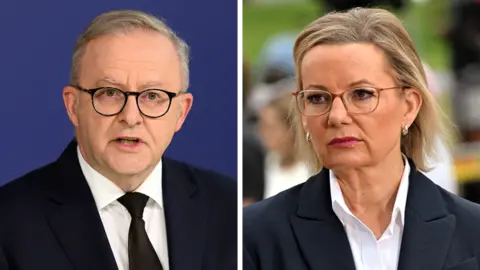
Veteran political commentator Malcolm Farr expressed disappointment at the timing of emerging political conflicts: It’s at the very least unfortunate timing and shows a certain amount of self-indulgence. After the shooting, there was immediate finger-pointing among politicians, which has ensnared both Prime Minister Anthony Albanese and opposition leader Sussan Ley.
In the wake of the antisemitic attack, where two gunmen opened fire during a Hanukkah event, a fierce public dialogue erupted surrounding government responsibility and reforms. Kass Hill, a local resident, remarked on the politicization of the tragedy, asserting, The fingerpointing isn’t solving anything. This sentiment has echoed through communities affected by heightened antisemitism and violence.
Heckles and Political Blame
As memorial events began, politicians rushed to the scene. Prime Minister Albanese found himself heckled at a memorial, confronted with crowd chants of disapproval. Critics accused him of neglecting to address concerns from Jewish communities prior to the attack.
Political responses have distinctly diverged from the nation’s past. In contrast to the united front shown after the Port Arthur massacre in 1996, where political leaders collaborated on gun control, the current environment has been marred by division, which has only intensified the public's cynicism about political motives.
Mark Kenny, a political columnist, attributes this to the pre-existing tensions surrounding the Israel-Gaza conflict igniting deeper divisions within Australian society that complicated responses to the Bondi tragedy.
The Search for Solutions Amidst Division
In response to the attack, Prime Minister Albanese proposed gun reform and a crackdown on hate speech. However, opposition from within the Coalition regarding these proposals led to the National Party's withdrawal from the coalition, exacerbating the political fragmentation.
Demands for a royal commission into antisemitism have also surfaced, though Albanese argues that it may lend a platform to discriminatory views, a stance that has attracted skepticism and criticism. The repeated calls for unity from politicians, contrasted with the visible discord, demonstrate a growing frustration among the electorate.
Tensions and Future Implications
The Bondi shooting has revealed significant fractures within Australian political institutions, foreshadowing a potential leadership crisis amid sagging approval ratings for both major political leaders. The public's trust has been eroded, as evidenced by poll results showing dwindling support for Albanese and Ley.
Analysts predict that this month of political strife could have lasting repercussions, reinforcing the belief that politicians prioritize self-interest over the public welfare. As the country grapples with these issues, the prospects for collaborative governance appear increasingly bleak, leaving many citizens questioning the integrity and capability of their political representatives.