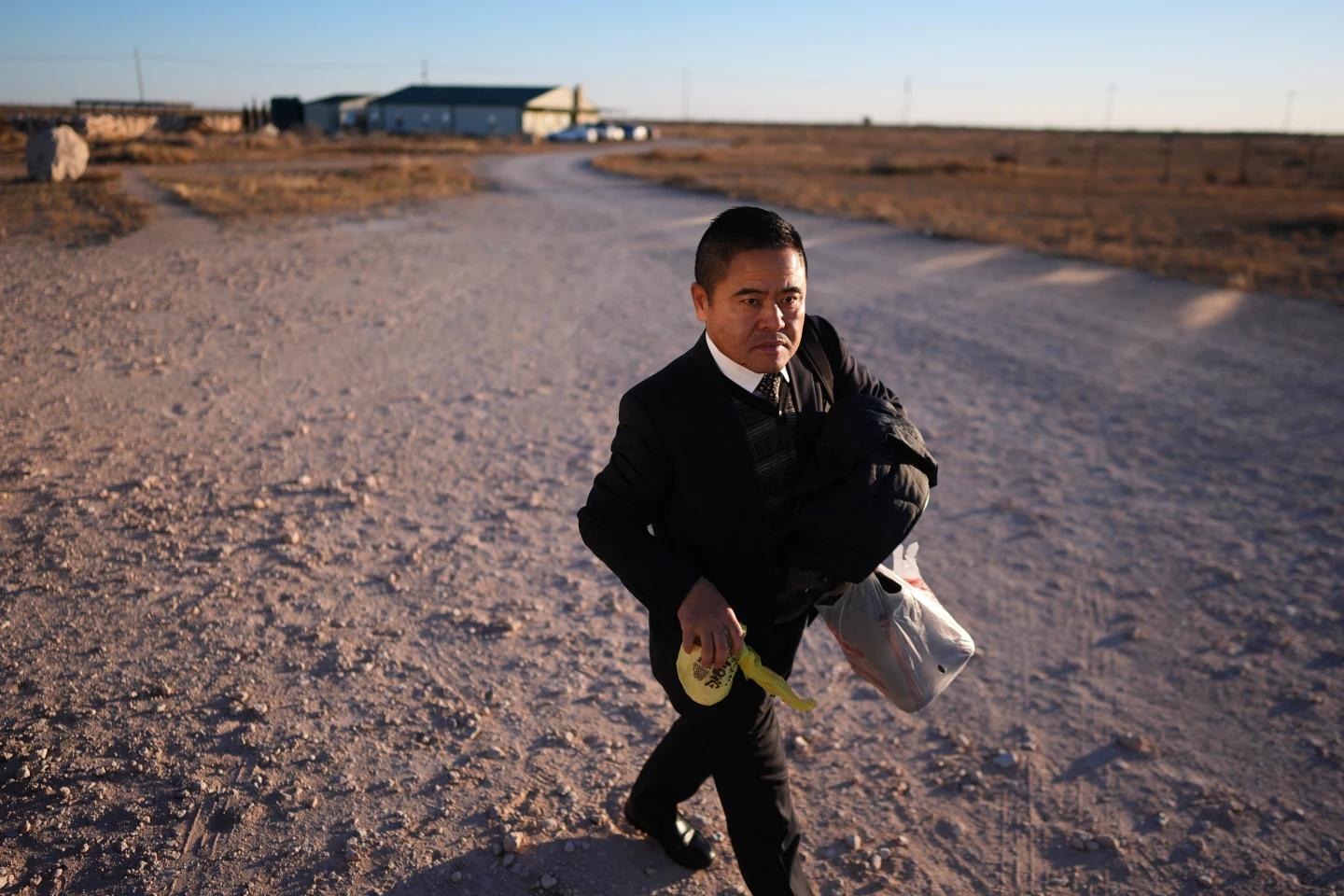
MIDLAND, Texas - Retired Chinese official Li Chuanliang was recuperating on a Korean resort island when he received a terrifying warning from a friend: 'Don’t return to China; you’re now a fugitive.'
After fleeing to the U.S. on a tourist visa, he applied for asylum, only to find that the Chinese government was actively pursuing him. Using advanced surveillance technology, Beijing has tracked his communications, seized his assets, and made threats against his family, including his pregnant daughter.
Li reported an experience of constant surveillance, stating, “They track you 24 hours a day,” underscoring feelings of vulnerability and fear even in the U.S. He and over 40 of his connections have faced monitoring or detainment. This relentless pursuit exemplifies how China extends its reach beyond its borders through high-tech means.
Li is not alone in his predicament; U.S. intelligence has highlighted that China's operations, often dubbed 'Fox Hunt' and 'Sky Net,' target anyone the government deems a threat—dissidents, former officials, and their families alike. More than 14,000 people have reportedly been coerced back to China, raising questions about national sovereignty and international relations.
This case raises critical concerns about the implications of surveillance technology developed or sold by American corporations, such as IBM and Microsoft, which can be repurposed by authoritarian regimes. Critics argue that these technologies enable not just a crackdown on corruption, as the Chinese government claims, but also facilitate widespread suppression of dissent.
Li, who initially supported the Chinese government's anti-corruption campaigns, became disillusioned after witnessing systemic abuses and corruption among officials. After bravely exposing the corrupt practices of his former colleagues and ultimately losing faith in the Party, he resigned and became a whistleblower. To date, more than 300 past officials have faced repercussions after attempting to defect or voice dissent, showcasing the chilling atmosphere in China.
Despite the dangers, Li maintains a fervent commitment to speaking out against the injustices he witnessed, stating, "Why am I speaking up? Today, it’s me. Tomorrow, it might be you." He embodies the struggle for freedom and justice amid a backdrop of oppressive surveillance tactics.