There were violent clashes between anti-government protesters and security forces in several locations in Iran on Wednesday, as a wave of unrest sparked by the country's economic crisis continued for an 11th day.
Iran's semi-official Fars news agency, which is close to the Revolutionary Guards, reported the tragic deaths of two policemen in the southwestern town of Lordegan due to armed individuals.
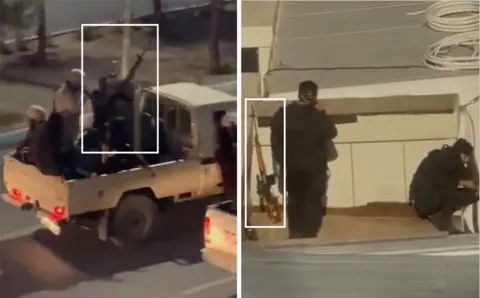
Videos circulating on social media showcased a tense standoff, complete with gunfire in the background, as the situation intensified. In various locales, security forces were seen firing guns and deploying tear gas at protesters, who retaliated with stones.
Notably, protests have now spread across 111 cities and towns within all 31 provinces, according to the US-based Human Rights Activist News Agency (HRANA). Reports state that at least 34 protesters and four security personnel have lost their lives during these confrontations, with 2,200 arrests recorded. BBC Persian has validated the identities of 21 deceased individuals, while the government acknowledges five security personnel among the casualties.
This current wave of protests began on December 28, originated by shopkeepers in Tehran expressing anger over the Iranian currency's sharp decline against the US dollar. The rial has reached historic lows over the past year, compounded by soaring inflation rates that touch 40%, driven by sanctions related to Iran’s nuclear program and compounded by governmental mismanagement.
University students joined the protests, which increasingly targeted the Supreme Leader Ayatollah Ali Khamenei through anti-government chants, at times expressing support for Reza Pahlavi, the exiled son of Iran's former shah.
Wednesday's protests were amplified as verified footage showed spirited crowds in Qazvin and Mashhad chanting slogans like 'Death to the dictator' and 'Long Live the shah'. Further demonstrations erupted in the city of Abadan, where protesters vocally denounced the clerical leadership.
In response to the mounting protests, Vice-President Mohammad Jafar Qaempanah announced that President Masoud Pezeshkian had mandated no security measures against peaceful demonstrators. However, armed individuals are categorized as rioters whose aggressive acts will prompt swift prosecution.
Khamenei has indicated that authorities should engage with protesters yet take measures against rioters, while US President Trump has threatened intervention if peaceful protesters face violence.
Experts see this unrest revealing deeper public discontent, with dire economic conditions leading many Iranians to feel hopeless about the future, raising fears of escalating violence in the government's response.
The scope of these protests marks a significant moment in Iran’s recent history, comparable to the widespread unrest following Mahsa Amini's death in 2022, where over 550 individuals were killed.
As the situation continues to develop, the international community closely monitors Iran's internal dynamics, amidst rising calls for change from a beleaguered populace.
Iran's semi-official Fars news agency, which is close to the Revolutionary Guards, reported the tragic deaths of two policemen in the southwestern town of Lordegan due to armed individuals.
Videos circulating on social media showcased a tense standoff, complete with gunfire in the background, as the situation intensified. In various locales, security forces were seen firing guns and deploying tear gas at protesters, who retaliated with stones.
Notably, protests have now spread across 111 cities and towns within all 31 provinces, according to the US-based Human Rights Activist News Agency (HRANA). Reports state that at least 34 protesters and four security personnel have lost their lives during these confrontations, with 2,200 arrests recorded. BBC Persian has validated the identities of 21 deceased individuals, while the government acknowledges five security personnel among the casualties.
This current wave of protests began on December 28, originated by shopkeepers in Tehran expressing anger over the Iranian currency's sharp decline against the US dollar. The rial has reached historic lows over the past year, compounded by soaring inflation rates that touch 40%, driven by sanctions related to Iran’s nuclear program and compounded by governmental mismanagement.
University students joined the protests, which increasingly targeted the Supreme Leader Ayatollah Ali Khamenei through anti-government chants, at times expressing support for Reza Pahlavi, the exiled son of Iran's former shah.
Wednesday's protests were amplified as verified footage showed spirited crowds in Qazvin and Mashhad chanting slogans like 'Death to the dictator' and 'Long Live the shah'. Further demonstrations erupted in the city of Abadan, where protesters vocally denounced the clerical leadership.
In response to the mounting protests, Vice-President Mohammad Jafar Qaempanah announced that President Masoud Pezeshkian had mandated no security measures against peaceful demonstrators. However, armed individuals are categorized as rioters whose aggressive acts will prompt swift prosecution.
Khamenei has indicated that authorities should engage with protesters yet take measures against rioters, while US President Trump has threatened intervention if peaceful protesters face violence.
Experts see this unrest revealing deeper public discontent, with dire economic conditions leading many Iranians to feel hopeless about the future, raising fears of escalating violence in the government's response.
The scope of these protests marks a significant moment in Iran’s recent history, comparable to the widespread unrest following Mahsa Amini's death in 2022, where over 550 individuals were killed.
As the situation continues to develop, the international community closely monitors Iran's internal dynamics, amidst rising calls for change from a beleaguered populace.