In brief
The General Assembly passed a resolution calling for an end to the U.S. embargo on Cuba with 130 votes in favor, 17 against, and 25 abstentions, a drop of 35 pro‑Cuba votes from 2025. The Cuban government condemned the vote as part of an ongoing U.S. sanctions strategy, while the United States blamed Cuban policy and called for a respectful debate. Calls for solidarity from Africa, Italy and the Vatican underscored the bloc’s pressurisation of the vote.
The United Nations General Assembly approved a resolution that calls for the United Nations to end the United States embargo against Cuba, voting 130 in favour, 17 against and 25 abstentions, according to United Press International. This result reflects a loss of 35 votes in support of the issue compared with the 165 pro‑Cuba votes recorded in 2025, and represents a significant rise in both opposition and abstentions.
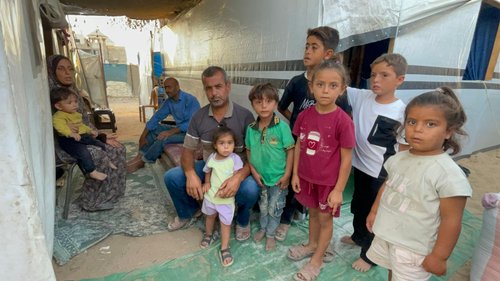
United Press International reports that the Cuban government condemned the vote as a continuation of Washington’s sanctions program and that Cuban Foreign Minister Bruno Rodríguez Parrilla denounced the “economic and humanitarian consequences” of United States sanctions, saying they limit fuel, medicine and food for ordinary Cubans.
U.S. officials, meanwhile, blamed Cuba’s internal policy and criticised the conduct of Cuban delegates, calling for a “peaceful and constructive debate.”“The consequences fall on people, limit their fundamental human rights, affect third countries and turn the population’s essential needs into instruments of political coercion,” Rodríguez parried.
United Press International noted that several Latin American countries shifted from support to opposition or abstention. Argentina, Colombia, Costa Rica, Ecuador and Paraguay moved to vote against the resolution; Chile, Peru, Honduras and the Dominican Republic chose abstention, while Colombia changed from a pro‑resolution position last year to opposition. The move also marked a swing in Europe, where Germany, Italy and Latvia had abstained rather than supported the resolution as in 2025.
Prensa Latina’s “Africa’s call with a single voice against U.S. Blockade of Cuba” urged Pan‑Africanist leaders to vote in solidarity with Cuba and warned that U.S. pressure tactics equated to blackmail. The article, written by analyst Fortune Madondo, warned that other African states could be targeted next, saying:
“U.S. officials—referring to Marco Rubio and Mike Waltz—are openly resorting to blackmail, employing sanctions, taxes, the suspension of cooperation programs, the denial of visas, and support for political opposition during elections.”
Another Prensa Latina piece, titled “Italian academician highlights solidarity with Cuba ahead of UN vote,” presented the moral appeal of Italian scholar Luciano Vasapollo, who urged European governments to reject U.S. pressure. Vasapollo highlighted the humanitarian impact of sanctions on Cuban families, citing a report that more than 883,000 people lived in vulnerable conditions as of September 2026, and connected this hardship to Cuba’s social programs and the family‑support initiatives highlighted on the radio program “Criterio Compartido.”
In the same network’s coverage, the National Italy‑Cuba Friendship Association (ANAIC) sent a letter to Italian foreign minister Antonio Tajani urging a favourable vote. The letter framed Italy’s historical opposition to U.S. sanctions as a “consistent approach leaving no room for external pressures or the influence of U.S. Senator Marco Rubio,” and reminded the minister of Italy’s strong friendship with Cuba that would benefit from a supportive vote at the upcoming General Assembly session.
Finally, Prensa Latina reported that Cuba’s Ambassador to the Holy See, Leyde Rodriguez, denounced the U.S. blockade as “genocidal,” citing $8.083 billion in damages between March 2025 and February 2026 and an increase of 7% over the previous period. Rodriguez warned that the blockade acts as a “naval blockade” under international law, adding that the cumulative losses over decades amount to $178.7 billion in current prices. He appealed for the United Nations to lift the blockade, describing it as a “collective punishment” aimed at suffocating the national economy.
“The damages inflicted upon the Caribbean nation reached a record figure of $8.083 billion between March 2025 and February 2026,” Rodriguez stated.
Across these perspectives, the UN vote reflects a convergence of critical sentiment toward the U.S. embargo—amid differing voices on how the resolve should be framed—from the U.S. and Cuban state officials to Africa, Italy and the Vatican. The resolution’s passage with 130 votes in favour demonstrates renewed international support for ending the embargo, even as significant opposition and abstention highlight the continuing geopolitical divisions and divergent assessments of the United States’ diplomatic and economic pressures on Cuba.