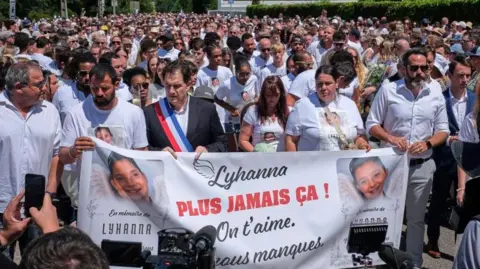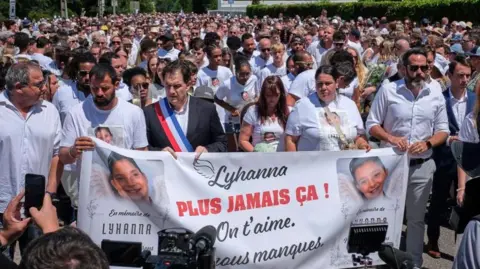
On Thursday, the small town of Fleurance in south‑western France held a burial for Lyhanna, an 11‑year‑old whose body had been found near a farm two weeks earlier. The ceremony drew residents and the family, who gathered outside the town hall in support of one another.
The case has heightened scrutiny of the French police procedure, after a 41‑year‑old suspect, Jérôme Barella, was only discovered to have a history of sexual‑abuse allegations when a recent sweep looked at his name following his arrest for a separate offence. Prior to that, investigators had not questioned him, despite his inclusion in police files for almost nine months.
According to the National Office for Minors (OFMIN), the “signal” that brought Barella to the authorities’ attention was considered weak, and the department receives roughly 300,000 such warnings each year. A review after his arrest confirmed that the oversight had not been intentional, but it highlighted systemic gaps.
The suspect’s wife, a friend of Lyhanna, was seen in the child’s car on the day the girl disappeared. Barella was arrested three days later, and Lyhanna’s body was found eight days subsequent, on a field near her home.
Beyond the parent case, Barella’s son, brother and father are also under investigation for various sexual‑abuse claims, raising doubts about the policing of a family identified with repeated offences. The former superintendent of Tanguy, a local training centre, reported that a neighbour had confronted Lleina about the suspect’s behaviour, linking the case to wider community concerns.
Local officials have called for a review of police prioritisation, emphasising that the failed investigations were not due to lacking resources, but insufficient prioritisation. Justice Minister Gérald Darmanin has resisted calls for resignation, with a recent poll indicating that most respondents believe he should remain in office.
Mayor‐elected officials across the Gers region have launched demonstrations outside town halls, in which flags are flown at half‑mast as a sign of mourning. Protesters call for new laws covering sexual violence and increased budgets for the justice system, while unions argue for structural reforms beyond short‑term measures.
Prime Minister Sébastien Lecornu has stated plans to tighten legal measures, including longer jail sentences for child rapists and time limits on investigations. Meanwhile, advocacy groups regularly hold protests outside courthouses on Mondays to demand sweeping changes in how cases of sexual abuse are handled.