In brief
Indiana's recent attempts to redraw congressional district maps have raised questions about the fairness of representation. Amid a mid-decade redistricting movement influenced by political necessity, leaders justify their actions by claiming a need for balance in a polarized political landscape. However, critics argue that these practices dilute community representation and undermine the democratic process, echoing a national trend where both major parties reshape district boundaries to reflect their partisan interests. The impact on minority voices and unique community needs is a growing concern.
When Indiana adopted new U.S. House districts four years ago, Republican legislative leaders lauded them as 'fair maps' that reflected the state’s communities.
However, in a recent turn of events, Gov. Mike Braun attempted to redraw the lines to secure an advantage for Republicans, contradicting his earlier stance. He urged lawmakers to 'vote for fair maps.'
What has changed? The very definition of 'fair.' As states embark on mid-decade redistricting efforts driven by political motives, both Republicans and Democrats are redefining fairness to rationalize district designs that fragment communities, striving to create skewed congressional delegations. Both sides argue that their strategies are justified due to similar actions in other states and necessary to maintain a balance in the House that reflects national political divides.
This new approach to drawing congressional maps is transforming the House into a winner-take-all environment, contrasting with its traditional role as a diverse representation of varied political perspectives. This shift could lead to diminished representation for minority communities, certain issues receiving less attention, and a reduction in the variety of voices contributing to federal discourse.
Despite Indiana state senators rejecting a proposed redistricting map backed by Trump and Braun that aimed to equip Republicans to win all nine congressional seats, other states, including Texas, California, Missouri, North Carolina, and Ohio, have already altered their district boundaries. More changes could happen before the 2026 midterms, which will be pivotal for congressional control.
Wayne Fields, a retired professor and expert on political rhetoric, calls this a fundamental undermining of democratic principles. 'The House is supposed to represent the people,' he explained, emphasizing the importance of diverse voices.
Redistricting's Impact on Community Representation
The constitutional framework ensures two senators for each state while the House has 435 members, distributed according to population. With districts averaging about 761,000 constituents, urban and rural voter preferences can vary widely. Yet, this year’s redistricting has been marked by significant deviations from previous voter representations.
For instance, California's redistricting split rural Trump-supporting counties from similar areas and combined them with liberal coastal districts. Missouri's Democrats in Kansas City found their representation divided among three districts, retreating into predominantly Republican zones. Residents have expressed dissatisfaction over feeling voiceless, although state governors defend gerrymandering as a necessary strategy to amplify majority representation.
The Contours of Fairness
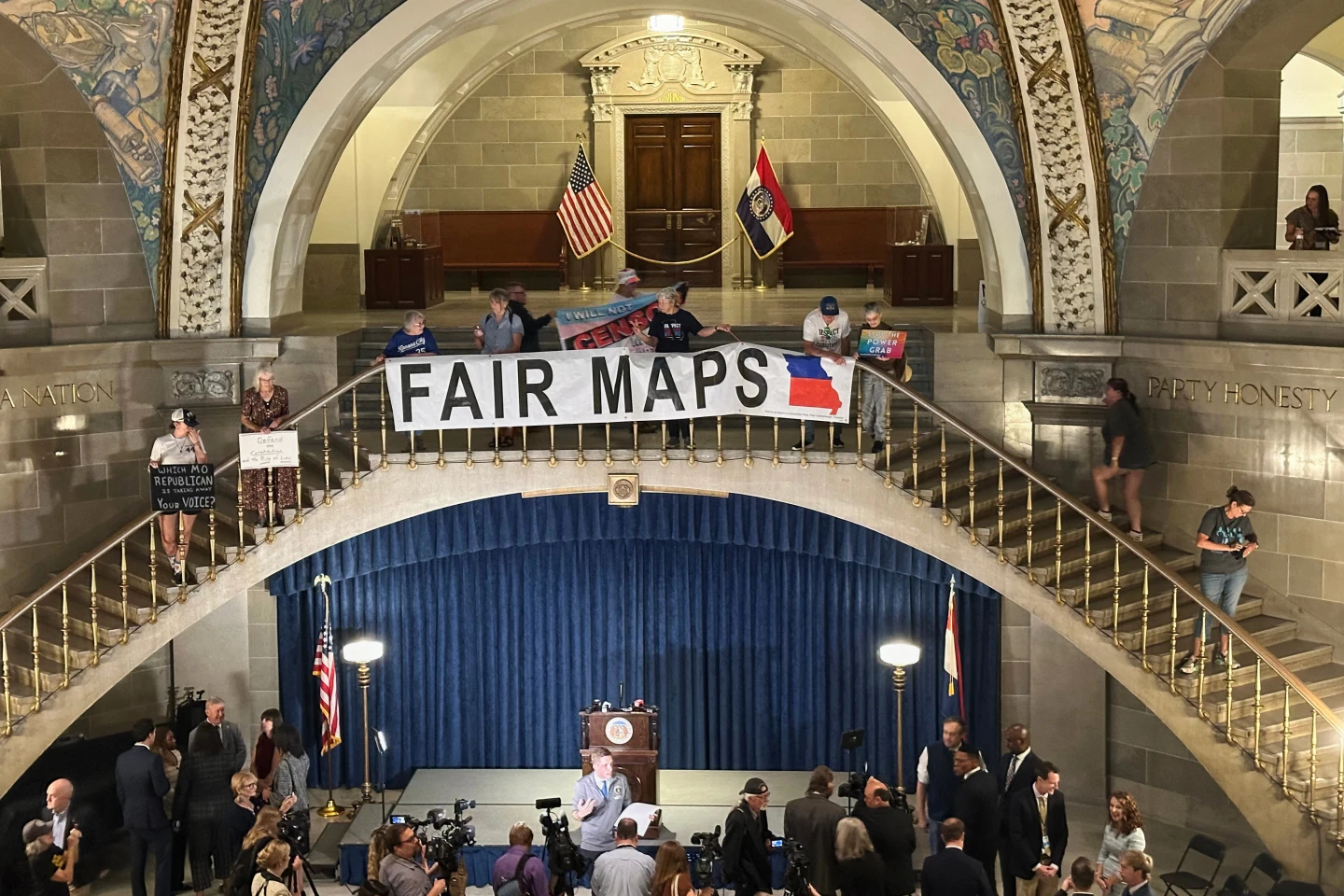
Currently, Indiana’s congressional representation consists of seven Republicans and two Democrats. In recent discussions, a proposal emerged that would split Indianapolis among four Republican districts while merging it with Republican areas near Chicago. Protests erupted as opponents rallied for fair representation.
While some lauded the proposed maps as necessary for reflecting Indiana's voting tendencies, others condemned it as a blatant power play, undermining the democratic tenets set by the Founding Fathers.
Recent national assessments point to a balanced House, yet growing disparities exist across districts, leading to an increased conservative-leaning representation in several states. Many academics and advocates are pressing for a return to compact districts that genuinely represent communities, arguing that the current trajectory threatens to disenfranchise voters.
The call for fair representation resonates with concerns that failing to prioritize community voices undermines democracy. As pressures mount for accountability in redistricting, experts hope for a renewed commitment to establishing fair and equitable electoral practices.