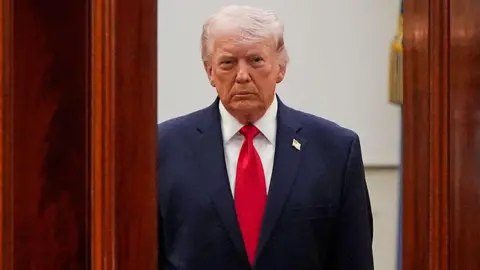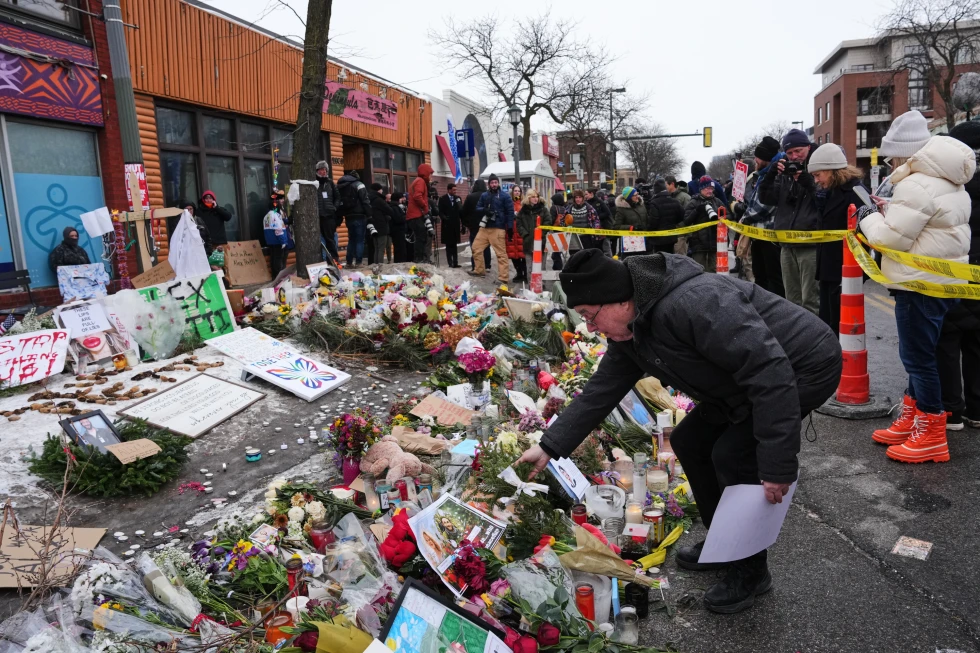
In a notable pivot, President Donald Trump has started to engage more constructively with Minnesota's Democratic leaders following the tragic death of protester Alex Pretti at the hands of federal agents during immigration enforcement operations. The shooting has prompted widespread condemnation, even from some within the Republican Party, leading to concerns about the administration’s aggressive approach to deportation efforts and protests against its policies.
Trump's change in rhetoric comes amid increasing criticism of his hardline immigration stance, particularly after Pretti’s death raised serious questions about the tactics employed by federal agents. Previously, Trump had taken a staunch position against opposition to his immigration policies, often using fiery language to address those he disagreed with.
In light of the recent events, Trump's administration has signaled a need for adjustments in Minnesota’s federal immigration strategy. Following discussions with Minnesota's Governor Tim Walz, Trump expressed a warmer tone, claiming both he and Walz had found common ground following a tumultuous exchange of words in recent weeks.
This shift marks a stark contrast to prior communications, where Trump and his aides had launched personal attacks against Walz, accusing him of inciting violence against immigration officials. However, the administration's tone has changed as uncertainty looms over the effectiveness and public perception of their more militant tactics.
Several Republican figures have begun to voice concerns over the operations, with some governors emphasizing the need for a re-evaluation of federal tactics in Minnesota. Texas Governor Greg Abbott noted the need for the administration to recalibrate its approach, reflecting concerns from party members who supported Trump’s previous policies.
Moreover, Trump's response to this incident has been notably less aggressive than his reactions to related violence directed against his political agenda in the past. This contrast raises questions about how the administration prioritizes responses based on political implications.
As the administration reassesses its strategy following public and intra-party backlash, it remains to be seen how Trump's conciliatory overtures will translate into policy changes on immigration enforcement amid ongoing debates about public safety and civil rights.
Trump's change in rhetoric comes amid increasing criticism of his hardline immigration stance, particularly after Pretti’s death raised serious questions about the tactics employed by federal agents. Previously, Trump had taken a staunch position against opposition to his immigration policies, often using fiery language to address those he disagreed with.
In light of the recent events, Trump's administration has signaled a need for adjustments in Minnesota’s federal immigration strategy. Following discussions with Minnesota's Governor Tim Walz, Trump expressed a warmer tone, claiming both he and Walz had found common ground following a tumultuous exchange of words in recent weeks.
This shift marks a stark contrast to prior communications, where Trump and his aides had launched personal attacks against Walz, accusing him of inciting violence against immigration officials. However, the administration's tone has changed as uncertainty looms over the effectiveness and public perception of their more militant tactics.
Several Republican figures have begun to voice concerns over the operations, with some governors emphasizing the need for a re-evaluation of federal tactics in Minnesota. Texas Governor Greg Abbott noted the need for the administration to recalibrate its approach, reflecting concerns from party members who supported Trump’s previous policies.
Moreover, Trump's response to this incident has been notably less aggressive than his reactions to related violence directed against his political agenda in the past. This contrast raises questions about how the administration prioritizes responses based on political implications.
As the administration reassesses its strategy following public and intra-party backlash, it remains to be seen how Trump's conciliatory overtures will translate into policy changes on immigration enforcement amid ongoing debates about public safety and civil rights.