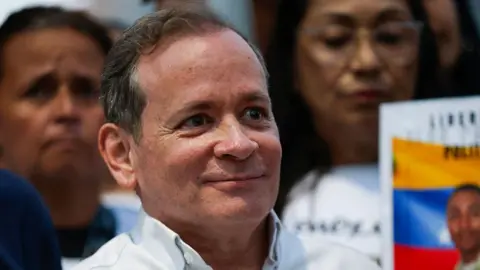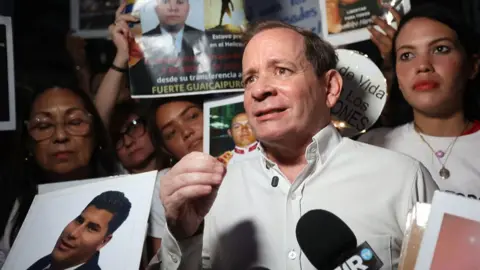
Rafael Tudares, the son-in-law of Venezuelan opposition candidate Edmundo González, has been released from prison, his wife has disclosed, marking the end of a 380-day period of detention that many consider unjust. Tudares's release follows a broader trend, as over 150 detainees have been freed since the US military's recent action against Nicolás Maduro's regime in Venezuela.
Mariana González revealed that her husband returned home after enduring a lengthy and uncertain imprisonment. She stated concerns over the remaining 777 political prisoners still languishing in Venezuelan jails, highlighting the ongoing plight of families searching for their loved ones.
Amid the political unrest, former vice president Delcy Rodríguez has assumed leadership, prompting international attention and support, notably from US President Donald Trump, who has expressed approval of Rodríguez's commitment to facilitate oil transfers to the US in exchange for political and economic support.
Releases of prisoners have become a focal point of negotiations under the Trump administration, as political prisoners were expected to be prioritized following the US military's intervention. Rights organizations like Foro Penal have scrutinized the pace of releases and noted that many freed individuals remain without resolved legal statuses.
Tudares's imprisonment stands as a significant example of state repression in the aftermath of the controversial 2024 presidential elections, a contest marked by allegations of fraud and political suppression directed against opposition figures like González.
In the lead-up to his incarceration, Tudares was unconnected to political activism but became emblematic of the government's crackdown on dissent. This situation has exacerbated fears and insecurity within the context of the Venezuelan political landscape.
Reflecting on her husband's release and the struggles of others, Mariana emphasized the need for awareness and action regarding injustices faced by many Venezuelans still held without justification. As families gather outside prisons, holding vigils for the unjustly detained, the Venezuelan political narrative continues to unfold with complexities that remain to be addressed.