In brief
Indian officials have rejected US Commerce Secretary Howard Lutnick's claims that a trade deal came to a standstill due to Prime Minister Narendra Modi's failure to contact President Donald Trump. The US had previously imposed hefty tariffs on Indian goods, adding tension to negotiations that have faced several hurdles, particularly regarding agricultural access. Despite the setbacks, India affirms its commitment to achieving a balanced trade agreement and its ongoing communications with the US.
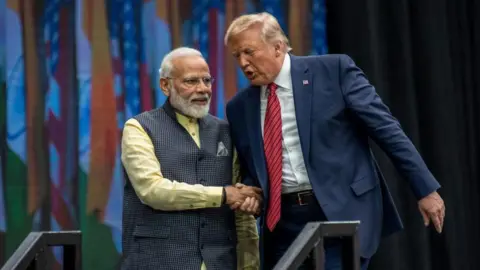
India has pushed back at US Commerce Secretary Howard Lutnick's claims that the trade deal between the countries stalled because Prime Minister Narendra Modi did not call President Donald Trump.
Trump imposed 50% tariffs on Indian goods in August, including a penalty for buying Russian oil, after the talks stalled.
Both sides are now back to negotiating a deal but there is no clarity on when it will materialise, and several informal deadlines have been missed.
Key sticking points remain even now — including agriculture. Washington has been pushing for greater access to India's farm sector, but Delhi has fiercely protected it.
However, Lutnick suggested the deal was close to completion at the start. It was all set up. I said [to the Indian side] you got to have Modi call the president. They were uncomfortable doing it, so Modi didn't call, Lutnick said in a podcast released on Friday.
The White House has not yet commented on Lutnick's assertions.
India, however, stated on Friday that the characterisation of the discussions between Delhi and Washington in the remarks made by Lutnick was not accurate.
India and the US were committed to negotiating a bilateral trade agreement as far back as 13 February last year. Since then both sides have held multiple rounds of negotiations to arrive at a balanced and mutually beneficial trade agreement. On several occasions, we have been close to a deal, foreign ministry spokesperson Randhir Jaiswal told reporters.
He added that Modi and Trump had spoken on the phone eight times last year, covering different aspects of our wide-ranging partnership.
Speaking on the All-In Podcast, a business and technology show hosted by four venture capitalists, Lutnick stated that Trump's philosophy of making deals was like a staircase — meaning the first stair gets the best deal.
He said that India was the second country to enter into negotiations with the US for a trade deal after the UK. Following a series of negotiations, he claimed that India's reluctance to set up a phone call resulted in the deal running into trouble.
Amid these negotiations, US closed deals with other nations, prompting Lutnick to express frustration that India had missed its chance.
Yet, the terms of the deal that Lutnick claims India missed remain unclear, particularly in the agricultural sector where Washington aims for increased access but Delhi stands firm in its protectionist policies.
Despite the ongoing tensions, India's exports to the US surged over 22% in November from the prior year, illustrating resilience in trade relations despite the imposed tariffs.
The relationship between India and the US, initially warm between Modi and Trump, has faced strains due to consistent tariff increases and other geopolitical discussions, including India's energy procurement from Russia post-Ukrainian conflict.
As negotiations continue, India maintains a focus on ensuring its trade talks align not only with economic benefits but also with its broader policy priorities.