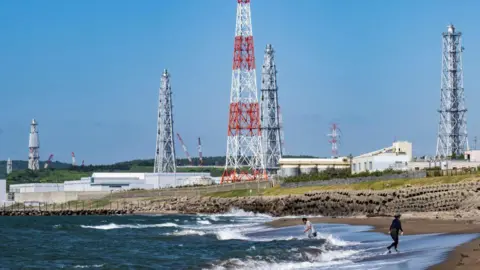
Japan has restarted a reactor at the world's largest nuclear plant nearly 15 years after a disaster at the Fukushima power plant forced the country to shut all its nuclear reactors.
Reactor no.6 at the Kashiwazaki-Kariwa plant located northwest of Tokyo was restarted on Wednesday, delayed by an alarm malfunction but expected to begin commercial operations next month.
This is the latest installment in Japan's nuclear power reboot, which still has a long way to go. The seventh reactor is not expected to be operational until 2030, potentially leading to decommissioning of the other five reactors. This results in a significant reduction of the plant's capacity from its previous 8.2 gigawatts.
Historically, Japan was heavily reliant on energy imports and had embraced nuclear energy; however, the 2011 Fukushima disaster, triggered by the most powerful earthquake ever recorded in Japan, severely undermined this ambition by causing nuclear meltdowns and massive radioactive leakage. The fallout traumatized local communities, many of whom still refuse to return home despite government assurances of safety.
Critics have highlighted the failures of the Tokyo Electric Power Company (Tepco), noting that during the disaster response, the company was ill-prepared, leading to an official report labeling the incident a 'man-made disaster'. Public distrust has persisted, prompting the shutdown of all 54 reactors post-Fukushima, as concerns about safety maintained strong opposition to nuclear energy.
Japan has been attempting to restart its nuclear facilities since 2015, with 15 out of 33 operational reactors back online. However, the Kashiwazaki-Kariwa plant is the first Tepco-owned reactor to resume operations.
Before the disaster, nuclear power contributed to nearly 30% of Japan's electricity, with plans to increase this to 50% by 2030. Last year's energy plan adjusted this to a more tempered goal: to source 20% from nuclear power by 2040 amid growing opposition to high energy costs following a decade of shutdowns.
On a global scale, nuclear energy momentum is increasing, with estimates predicting a possible doubling of worldwide nuclear capacity by 2050. Prime Minister Sanae Takaichi has emphasized the critical role of nuclear energy for Japan’s energy security as demand steadily grows, especially due to industries like data centers and semiconductor manufacturing. Nevertheless, operational costs have increased markedly due to new safety regulations requiring significant corporate investments for plant restart.
The future of nuclear power in Japan remains uncertain. Recent incidents, such as document mishandling at the Kashiwazaki-Kariwa plant, continue to erode public trust, despite Tepco’s commitments to improved transparency and safety. The road back towards a nuclear resurgence is fraught, as public sentiment sways between the necessity for energy independence and the fears rooted in past tragedies. As protests against nuclear power mount, concerns linger about the adequacy of new safety measures against extraordinary calamities, posing the question of whether Japan can revitalize its nuclear strategy without repeating its historical failures.