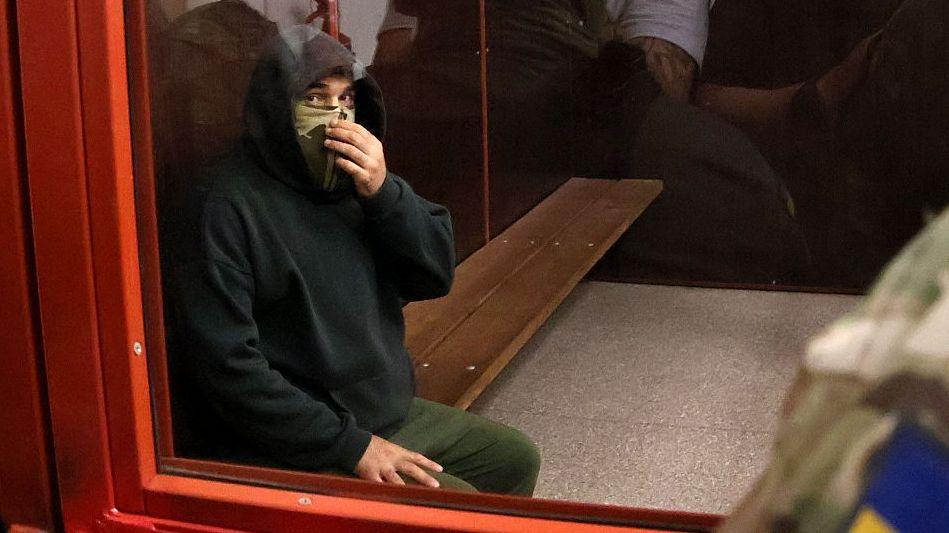
Vitalii Zhykovych, the suspect most often cited in the Monaco bomb attack, issued a statement, appearing on camera in a Kyiv prison, that could reshape the narrative of the case.
In the interview, the former security‑service officer claimed he was a freelance operative for Ukraine’s Security Service (SBU). He insisted the bombing was not a rogue act but a mission authorised by “senior members” of the Main Intelligence Directorate (HUR), the ministry of defence’s covert arm.
Zhykovych names Vladyslav Reut – an active‑duty HUR agent – as the ideological and operational mastermind. He alleges that Reut told him the target, billionaire businessman Vadym Yermolayev, was funding the annexation of Crimea, an assertion that would provide “grounds for the operation.”
The allegations are at odds with the Ukrainian police and prosecutors, who are conducting a formal investigation. They have described Zhykovych only as a former law‑enforcement member and insist the case remains a “complex crime with no preliminary evidence of state involvement.”
Yermolayev, who renounced his Ukrainian passport years ago and now holds Cypriot citizenship, has repeatedly denied any business ties to Russia. In light of Zhykovych’s claims, family members and business colleagues express heightened concern, while Yermolayev himself calls for “truth, protection and justice.”
A soundtrack of conflicting narratives is also carried by the victim’s family. Anastasia Berezovska, the woman captured on CCTV for planting the bomb, was later found dead in Ukraine’s woods under circumstances that now seem laden with village rumours and alleged follow‑up from Reut and Zhykovych. Berezovska’s husband dismisses the allegations that she was manipulated into the operation, insisting she was unwittingly dragged into a larger scheme.
International observers note the symbolic nature of a Monaco bombing: a wealthy target abroad rather than a domestic objective. The incident raises the question of whether it was a targeted assassination, a vendetta over entwined criminal and political motives, or an extension of state‑led coercive tactics.
As Ukrainian authorities continue investigations into both the attack and Berezovska’s killing, the refusal to provide details on a second target – potentially a pro‑Russian blogger convicted in absentia – adds further tension. Law‑enforcement officials have urged the public to be patient as evidence is amassed.
For those seeking to understand the full scope of what unfolded in Monaco and the ensuing legal battles in Ukraine, the most pressing questions remain: Was a high‑level military intelligence directive behind the attack? And what implications does this hold for international norms surrounding privacy, security, and sovereignty?