What we know about Trump's 'framework of future deal' over Greenland
US President Donald Trump has announced there is a framework of a future deal with respect to Greenland. The statement came as a surprise after days of mounting tensions, culminating with a threat to impose economic sanctions on eight close US allies which have opposed his plans to seize the semi-autonomous territory of Denmark.
So what could this deal entail and will it be acceptable to Denmark and Greenland - both of which have made it clear they will not relinquish sovereignty of the world's largest island in the Arctic?
What has been said about the framework deal?
President Trump made the announcement on his Truth Social media platform on Wednesday, after talks at the World Economic Forum in Davos, Switzerland. Based upon a very productive meeting that I have had with the Secretary General of NATO, Mark Rutte, we have formed the framework of a future deal with respect to Greenland, he said.
He did not give details, but stated talks would continue to reach the deal. Rutte claimed he had not discussed the key issue of Danish sovereignty over Greenland during his meeting with Trump.
The view in Denmark is that the issue is far from over, and any agreement must be established collaboratively between Greenland, Denmark, and the US. Danish Prime Minister Mette Frederiksen emphasized that while they could negotiate on political matters, sovereignty was not up for discussion.
Greenlandic Prime Minister Jens-Frederik Nielsen expressed willingness to negotiate a better partnership with the US but asserted that sovereignty remains a red line.
Is there any detail? What are the options?
The New York Times reported that one idea under discussions includes Denmark ceding sovereignty over specific areas of Greenland to allow the US to establish military bases. This would resemble the arrangement of British-controlled military bases in Cyprus.
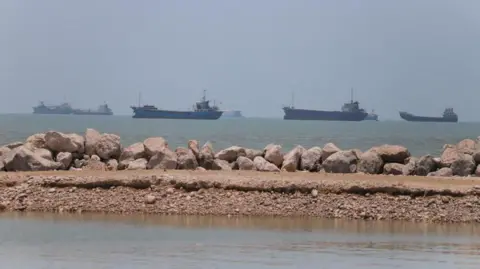
However, both Denmark and Greenland have rejected any notion of relinquishing sovereignty. Trump has raised national security concerns, citing threats from Chinese and Russian vessels, despite Danish authorities indicating that no immediate threats exist.
NATO allies have responded by offering to bolster security in the Arctic, with plans potentially involving the establishment of an Arctic Sentry similar to their previous missions in the Baltic Sea.
Will any deal short of 'ownership' please Trump?
The US has maintained a military presence in Greenland since World War Two. A 1951 agreement allows the US to deploy troops indefinitely. Discussions might center on renegotiating this agreement, but the challenge of Greenland's public land, which cannot be sold or bought, complicates matters.
Despite these technical issues, Trump has expressed dissatisfaction with lease agreements, insisting that true control - or ownership - is essential for security. In earlier statements, he suggested the use of force to secure Greenland before backing off amidst significant international concern.
Greenland's foreign minister conveyed that while they have not requested NATO to negotiate on their behalf, their position on sovereignty has been articulated directly to President Trump. Nonetheless, the route to any acceptable agreement remains fraught with obstacles as both Danish and Greenlandic leaders prepare to uphold their claims.