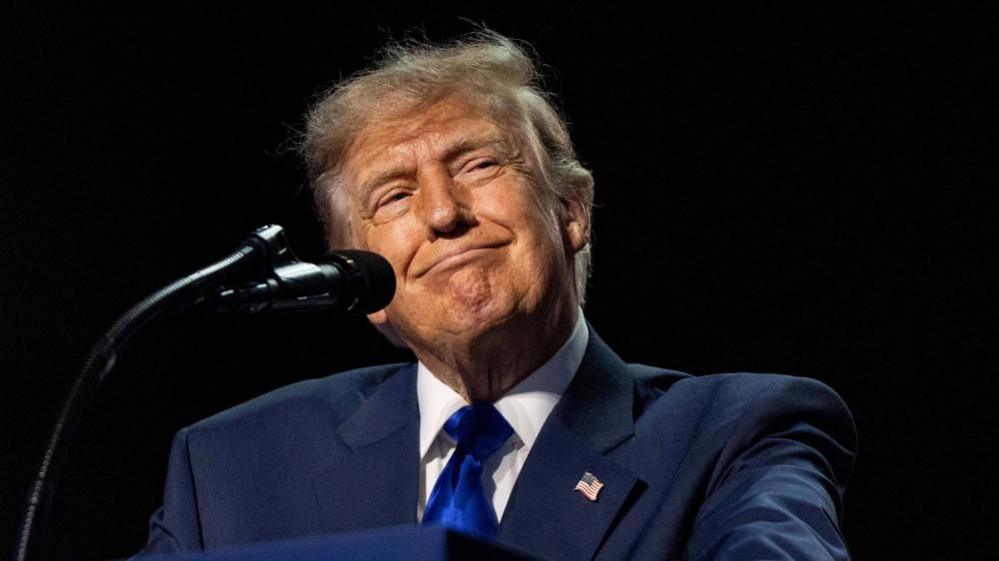
President Donald Trump has announced that the U.S. military is contemplating very strong options regarding Iran, as widespread anti-government protests continue to escalate.
Reports from the Human Rights Activist News Agency (HRANA) indicate that nearly 500 protesters have been confirmed dead, alongside 48 security personnel, although estimates suggest the actual toll may be higher.
In response to the unrest, Trump has expressed the possibility of U.S. military intervention while claiming that Iranian officials have sought to negotiate, stating, we might have to act before a meeting.
The Iranian government has dismissed the protestors, labeling them as vandals, and organized pro-government demonstrations as a show of force.
In a declaration of mourning for those killed in the protests, the Iranian regime has linked the violence to a battle against U.S. and Israeli influences in the country, asserting these nations are contributing to the unrest.
The protests have primarily erupted due to anger over the volatile economy and plummeting currency value, thereby challenging the legitimacy of Iran's leadership under Ayatollah Ali Khamenei.
Trump has yet to clarify the nature of the military options under consideration, but U.S. officials disclosed that potential strategies might include military strikes, cyber operations, or sanctions aimed at bolstering anti-government factions within Iran.
Despite a reduction in protest activity as fears of government retaliation increase, the Iranian regime has detained over 10,600 individuals during the ongoing unrest, raising alarm about the state’s aggressive approach to dissent.
In various areas, reports indicate significant casualties, including graphic footage showing mortality rates nearing 180 bodies observed at morgues. Civilians express fear as the government deploys drones to monitor crowd activities.
Iran's leadership has warned that any U.S. military action would lead to its military and shipping targets, including those of Israel, being regarded as legitimate targets, further raising concerns about escalating conflict.
As the situation develops, it remains pivotal to monitor the interplay between internal protests and external political pressures arising from U.S. actions.