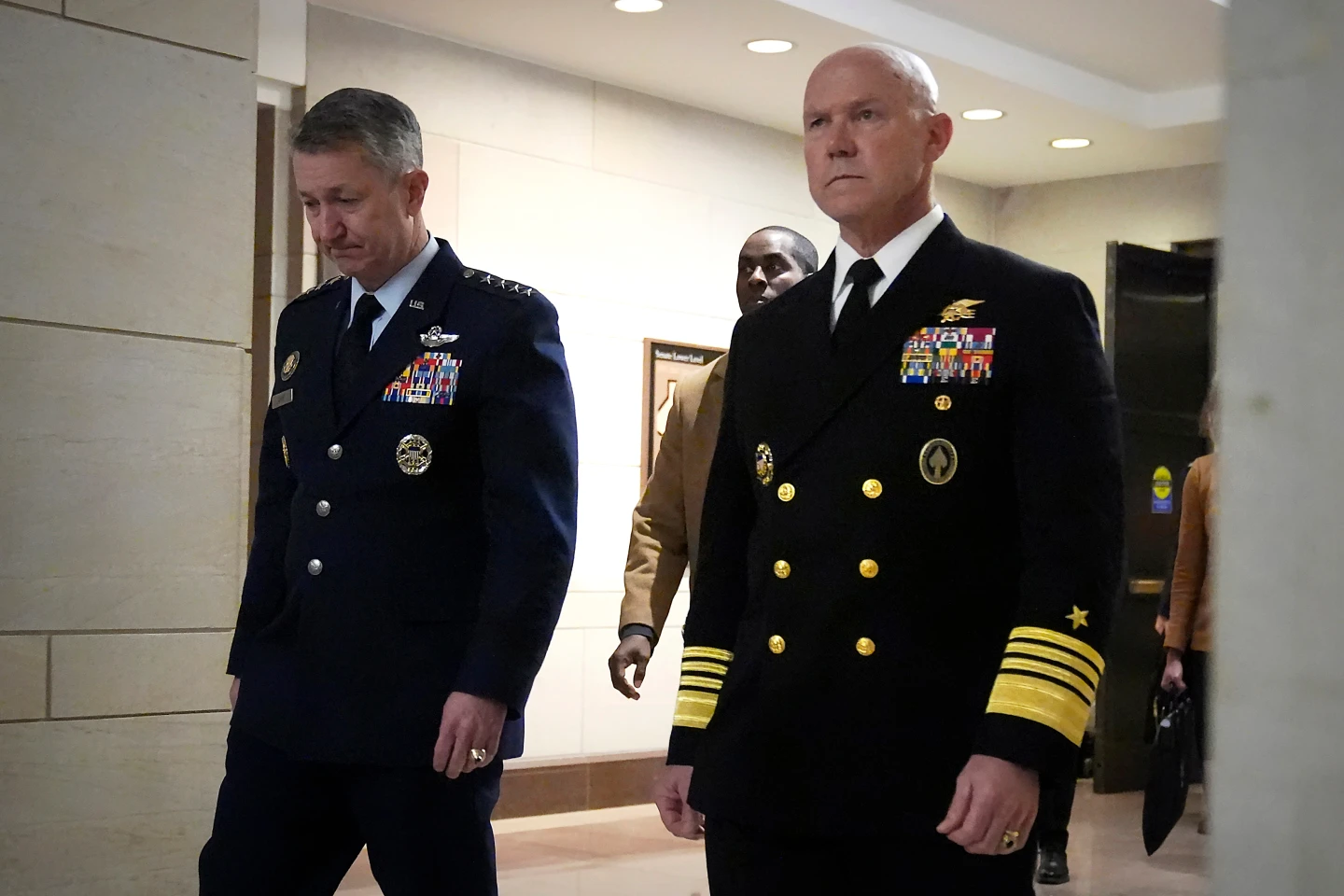
The U.S. military's recent engagement against alleged drug smuggling operations near Venezuela has stirred up significant controversy. Congressional hearings revealed that military personnel opened fire on two individuals floating among the wreckage of a vessel that was reportedly carrying cocaine. The strikes are part of a wider military campaign that has reportedly destroyed over 20 boats and resulted in approximately 87 fatalities. Lawmakers are questioning the legality and ethical foundation of these military actions, especially as they consider the implications for the laws of armed conflict.
According to Adm. Frank Mitch Bradley, who oversaw the strikes, the military deemed these individuals legitimate targets due to the belief that bales of cocaine were still aboard the wreckage. This assertion is contentious, as it sets forth the administration's legal framework which categorizes drug trafficking as similar to a terrorist threat, allowing military engagement under rules traditionally reserved for wartime scenarios.
Democratic lawmakers are expressing alarm over the implications of this broad definition. They emphasize that such interpretations warrant increased scrutiny and potentially threaten human rights protections. As discussions continue, the implications of the campaign's rationale are being examined closely, particularly concerning authorization and oversight by Congress.
The Navy’s recent actions, including a follow-up strike that killed additional individuals, have realigned the dialogue around military jurisprudence and the potential for civilian casualties. In moving forward, questions remain about military orders, operational transparency, and the overall strategy in combating drug-related crimes on an international scale.
According to Adm. Frank Mitch Bradley, who oversaw the strikes, the military deemed these individuals legitimate targets due to the belief that bales of cocaine were still aboard the wreckage. This assertion is contentious, as it sets forth the administration's legal framework which categorizes drug trafficking as similar to a terrorist threat, allowing military engagement under rules traditionally reserved for wartime scenarios.
Democratic lawmakers are expressing alarm over the implications of this broad definition. They emphasize that such interpretations warrant increased scrutiny and potentially threaten human rights protections. As discussions continue, the implications of the campaign's rationale are being examined closely, particularly concerning authorization and oversight by Congress.
The Navy’s recent actions, including a follow-up strike that killed additional individuals, have realigned the dialogue around military jurisprudence and the potential for civilian casualties. In moving forward, questions remain about military orders, operational transparency, and the overall strategy in combating drug-related crimes on an international scale.