The general in command of Venezuela's presidential honour guard, Javier Marcano Tábata, has been sacked days after Venezuelan leader Nicolás Maduro was seized by U.S. forces in a raid in Caracas and taken to New York to stand trial on narco-terrorism charges.
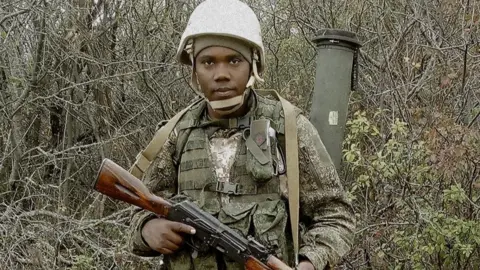
The presidential honour guard is the military force which provides the bodyguards tasked with protecting the head of state.
While the Venezuelan government has not yet provided a detailed breakdown of casualties, members of the guard are thought to be among the dozens of people killed in the U.S. operation to seize Maduro.
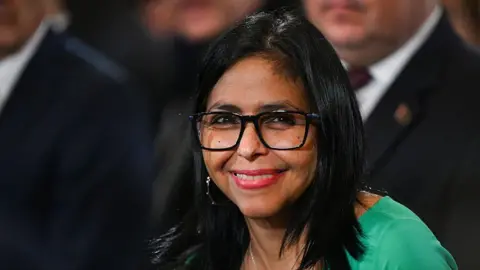
The order to replace Gen Marcano Tábata was issued by the new interim president, Delcy Rodríguez.
Rodríguez was sworn in by the National Assembly, which is dominated by government loyalists, on Monday.
She served as Maduro's vice-president and is considered to be a close ally of the jailed leader.
U.S. President Donald Trump stated at a subsequent press conference following Maduro's capture that the United States would 'run' Venezuela and noted ongoing discussions with Rodríguez.
He warned Rodríguez of consequences, saying she would face a 'fate worse than Maduro's' if she did not comply with U.S. demands regarding oil resources.
On Tuesday, Trump claimed that Venezuela would be 'turning over' up to 50 million barrels of oil to the U.S.; however, Venezuela's interim government has remained silent on this statement.
Rodríguez's statements have oscillated between defiance against the U.S. and calls for cooperation. She condemned Maduro's seizure as an 'illegal kidnapping' while expressing an interest in collaborating with the U.S.
The sacking of Gen Marcano Tábata represents a crucial early decision in her administration.
In addition to his role in the presidential guard, Gen Marcano Tábata led Venezuela's military counterintelligence unit, known as DGCIM, which has faced accusations of human rights violations, according to the United Nations.
His ousting, however, does not seem to be directly linked to DGCIM's history of repression as his successor, Gustavo González López, has also been associated with claims of abuse.
Some analysts suggest Marcano Tábata's dismissal may be a result of inadequate defense against the U.S. raid targeting Maduro.
Cuba, a significant ally of Venezuela, reported the deaths of 32 nationals during the operation, many linked to the presidential guard.
In the aftermath, Venezuela's military has disclosed that 23 of its members were killed, including five generals. Some government supporters have expressed humiliation regarding the U.S. overpowering of Venezuela's defense systems.
Replacing Marcano Tábata could be Rodríguez's move to establish a more reliable inner circle amidst fears of further U.S. interventions.
Trump recently indicated that U.S. forces were prepared for additional strikes if deemed necessary.
Rodríguez's leadership will be scrutinized both internally and externally as observers anticipate her next steps amid this volatile backdrop.