In brief
The US is ordering icebreakers from Finland, renowned for its icebreaker expertise, to bolster its presence in the Arctic. With concerns over Russia and China's activities in the region, these purchases aim to ensure navigability and safeguard national interests. The initiative includes both acquiring Finnish-built vessels and fostering domestic construction.
As President Trump emphasizes the need for US control over Greenland, his administration’s strategy has turned to the Arctic, leading to increased icebreaker orders from Finland, recognized as the world's foremost expert in this area.
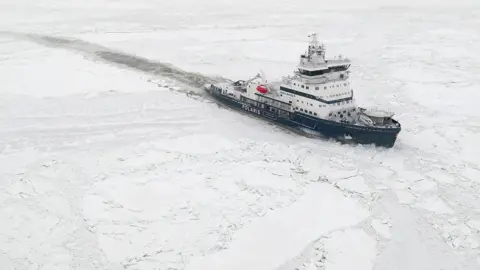
In the Aker Arctic Technology facility in Helsinki, a model icebreaker undergoes rigorous testing in simulated icy waters to ensure its design meets the challenging demands of operating in freezing conditions. It's crucial that it has sufficient structural strength and engine power, explains Riikka Matala, an ice performance engineer. Finland’s prowess in this sector is underscored by the fact that its companies have been responsible for 80% of operational icebreakers globally.
The scouting and navigating role of icebreakers is imperative for Finland, where extreme winter conditions can freeze all harbours. This instant need has driven Finland’s leadership in icebreaker innovation, with over 60% of vessels built in its shipyards.
President Trump outlined plans to order four icebreakers from Finland for the US Coast Guard, further aiming for seven additional vessels to be constructed domestically, using Finnish designs. This strategic move not only reflects the US's acknowledgment of Finland's capabilities but also addresses national security concerns amid heightened Russian and Chinese activity in Arctic waters.
As climate change makes the Arctic Ocean increasingly navigable, the US aims to bolster its capabilities to maintain control over evolving shipping routes. Currently, Russia leads with approximately 40 icebreakers, while the US operates only three, highlighting a notable disparity in Arctic readiness.
Finland’s rapid shipbuilding expertise is showcased in the production timeline for these complex vessels, which can be completed in just two and a half to three years. This efficiency comes from over a century of experience and an established network of designers, operators, and builders.
These developments highlight not only tactical military interests but also a broader strategy for the US to assert its presence as an Arctic power, characterized by its commitment to modernizing its icebreaker fleet amid a changing global landscape.