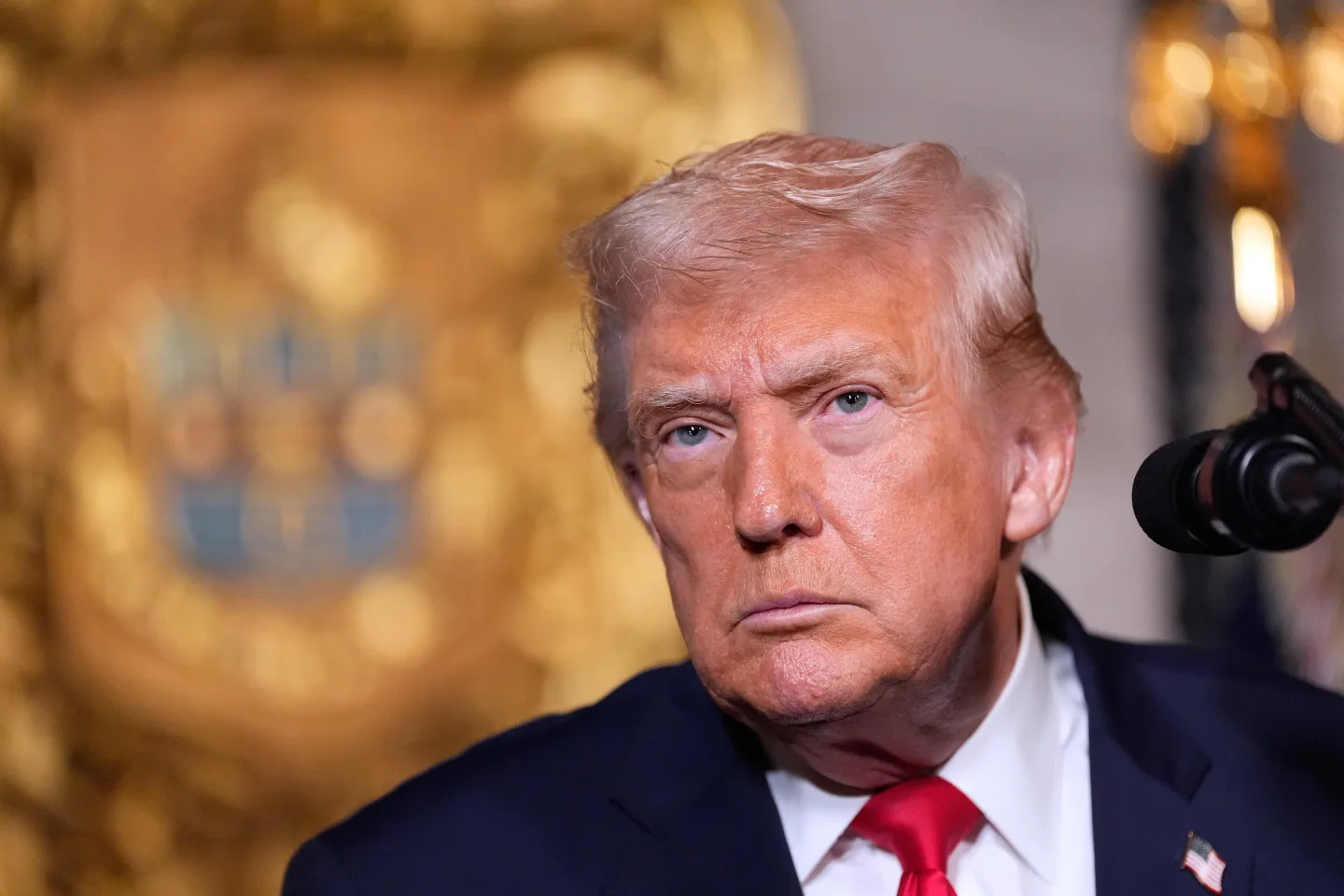
President Donald Trump has declared that the United States launched a powerful and deadly strike against Islamic State (IS) forces in Nigeria. This military action follows weeks of Trump criticizing Nigeria's government for its inability to control violence aimed primarily at Christians in the region.
In a post on his social media platform on Christmas, Trump did not provide specifics regarding the damage caused by the airstrikes in Sokoto, a northwestern state of Nigeria. A Defense Department representative confirmed that the U.S. collaborated with Nigeria for the strikes, which had received approval from the Nigerian government.
The Nigerian Ministry of Foreign Affairs emphasized that the cooperative efforts included intelligence sharing and strategic planning, stressing adherence to international laws and respect for Nigeria's sovereignty.
Nigeria's Armed Conflict Overview
Nigeria is currently grappling with various armed groups, including at least two affiliated with the Islamic State, namely the Islamic State West Africa Province and the Lakurawa group, which operates extensively in northwestern Nigeria. Security analysts interpret the recent strikes as targeting the Lakurawa group, which has grown more lethal and aggressive in attacking remote communities.
According to Malik Samuel, a Nigerian security researcher, the Lakurawa group has seized control over territories in Sokoto and other states, exacerbating Nigeria's security crisis due to a lack of state presence and security forces in vulnerable areas.
Widespread Violence and its Effects
While Trump highlighted the targeting of Christians, many residents and analysts note that violence resulting from extremism affects Nigerians from diverse faiths. The Nigerian Ministry of Foreign Affairs asserted that acts of terror, regardless of the target, undermine the nation's ideals and international peace.
The government responded to Trump's remarks by highlighting the suffering experienced by individuals from multiple religious backgrounds at the hands of extremist groups. Trump has previously ordered measures aimed at addressing violence against Christians, including recent visa restrictions for Nigerians involved in such activities.
Strategic US Involvement in Nigeria
Moreover, Trump has taken steps to enhance the U.S. military posture in Nigeria. The Pentagon was instructed to devise strategies against the ongoing Christian persecution, culminating in the designation of Nigeria as a country of particular concern under the International Religious Freedom Act.
Despite historical security challenges, analysts note that a reshaped U.S. security footprint in Africa could affect prospects for extensive military engagement in Nigeria, especially as military collaborations decrease in the region.
Community Divisions and Violence
Nigeria is home to a balanced population between Christians and Muslims, and violence often stems from a range of factors, including religious extremism and clashes over resources. Nigerian forces are frequently outmatched by both organized groups and ill-equipped security forces, forcing civilians into a cycle of violence and insecurity.
Recent attacks have targeted various institutions, affecting both schools and religious houses of worship. Defense Secretary Pete Hegseth communicated the U.S. military's readiness, invoking the need for an immediate response to protect innocent lives in Nigeria.
Experts continue to emphasize the importance of understanding the multifaceted nature of violence in Nigeria as the U.S. navigates its role in addressing this ongoing crisis.